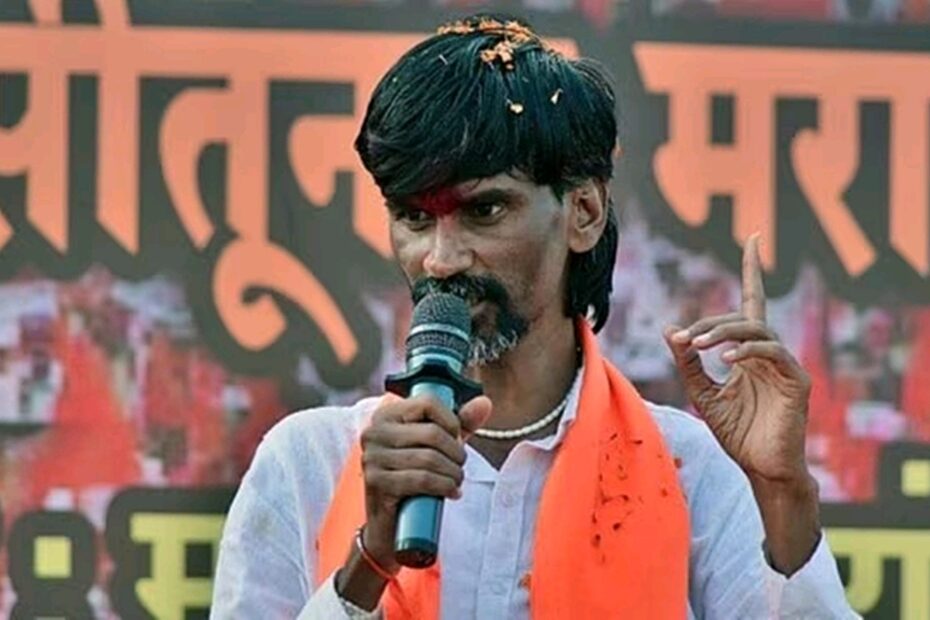
With Maratha reservation activist Manoj Jarange-Patil renewing his demand to expand the ambit of Kunbi certificates for the community beyond the Hyderabad Gazette, the BJP in Maharashtra is potentially staring at a difficult political situation. Adding to the BJP’s and Chief Minister Devendra Fadnavis’s predicament is the growing opposition to Jarange-Patil from a section of the Other Backwards Classes (OBC) community.F
The issue has acquired a sharper political edge as Maharashtra has grappled with competing reservation demands for nearly a decade. While the BJP has historically benefited from OBC consolidation during periods of Maratha agitation, party strategists now admit that the political equation is less predictable.
Advertisement
“In the past, Maratha protests triggered polarisation to our advantage. Now, we don’t know how the situation will unfold in the wake of student protests and attempts by the Congress to revive (the issue),” said a source in the BJP.
OBCs have been at the centre of the party’s social-engineering strategy in Maharashtra for decades. Any perception that the government is allowing large numbers of Marathas to enter the OBC quota risks unsettling a constituency that the party has carefully cultivated.
“The OBCs have started feeling that the government is pampering Marathas beyond reason simply because they take to street agitation fiercely,” a BJP insider said.
Advertisement
OBC grievances
OBC leaders claim that the community, spread across nearly 250 sub-castes, accounts for close to half of Maharashtra’s population, compared with an estimated 30% for Marathas. These estimates, however, remain politically contested in the absence of a recent caste-based enumeration of OBCs.
Even as OBC leader Laxman Hake postponed his proposed Mumbai protest until after the Ganesh festival, he warned that the agitation could become more aggressive if the government failed to address the community’s concerns. Revenue Minister Chandrashekhar Bawankule, meanwhile, said he would seek a meeting between Fadnavis and an OBC delegation.
Two issues have particularly fuelled OBC anxiety: the absence of a separate OBC column in the caste census and the government’s handling of Kunbi certificates.
Kunbis are part of the OBC category in Maharashtra, and a Maratha who obtains a valid Kunbi certificate can claim reservation under the existing 27% OBC quota.
Maratha organisations argue that historical records, including those relating to the erstwhile Hyderabad State, establish Kunbi ancestry among sections of the community. OBC organisations, however, fear that a wider interpretation of these records could substantially increase the number of Marathas eligible for OBC reservation.
Fadnavis has repeatedly sought to reassure both sides. “The government will not do any injustice to any community. The OBC quota will not be compromised,” he said. At the same time, the Chief Minister has maintained that there would be no injustice to the Maratha community and that “whatever is legally and Constitutionally valid will be done”.
The CM’s assurances, however, have seemingly failed to allay OBC fears. Senior community leader Prakash Shendge said the OBCs were increasingly feeling “betrayed” by the government. “They are not just angry but hurt,” he said, adding that OBC groups were distancing themselves from the BJP.
Shendge cited state minister Chhagan Bhujbal’s decision to walk out of the government’s sub-committee dealing with the issue as an indication of the growing disconnect.
“If a Cabinet minister walks out of a sub-committee, it shows something is not working,” he added.
A section of OBC leaders is also miffed with the government’s “partial attitude”.
“While senior ministers like Radhakrishna Vikhe-Patil and Uday Samant engaged with Jarange-Patil, we have received far less attention,” said an OBC leader.
National OBC Federation president Babanrao Tayade has urged the community to maintain restraint but warned of protests.
“Our approach has been to engage in dialogue and get our demands fulfilled. If the government fails to heed our demand for a caste census with a separate column for OBCs and ensure that the OBC quota remains intact, we will be forced to take to the streets,” he said.
Why OBCs are crucial to BJP
The BJP’s Maharashtra strategy has long involved building a social coalition beyond the state’s dominant Maratha political class. Party ideologue Vasantrao Bhagwat’s MADHAV formulation — Mali, Dhangar, and Vanjari — was an early attempt to consolidate key OBC communities behind the BJP.
The strategy reflected a political landscape in which the Congress had a strong hold over Marathas, Dalits and Muslims. The BJP sought to build an alternative social base by expanding its support among OBCs.
Over time, the party widened its outreach to include Marathas as well. OBCs, however, remained critical to its electoral expansion, particularly after the Maratha reservation movement intensified from 2017 onwards.
In the 2024 Maharashtra Assembly elections, the BJP expanded its outreach beyond the traditional MADHAV grouping to smaller and micro-OBC communities and won 132 of the state’s 288 Assembly seats.
That success makes the current dispute particularly sensitive. The BJP must now balance two electorally significant constituencies that increasingly appear to be looking at the same reservation pool from opposite sides.
Shendge argues that the government has so far avoided addressing the larger question: how much reservation can one community effectively access through different routes?
He pointed to the 10% reservation provided to Marathas under the Socially and Educationally Backward Classes Act, the 10% EWS quota and the possibility of eligible Marathas accessing OBC reservation through Kunbi certificates.
Quota history shapes debate
The government, however, maintains that an individual cannot claim reservation simultaneously under multiple categories and can avail themselves of benefits only under the category for which they are legally eligible.
The debate is also shaped by the legal history of Maratha reservation. The Maharashtra government’s 2018 law providing 12% reservation to Marathas in education and 13% in government jobs was struck down by the Supreme Court in 2021. The Court held that the reservation breached the 50% ceiling and that the exceptional circumstances required to cross that limit had not been established.
In 2025, the Mahayuti government issued a Government Resolution (GR) enabling Marathas of Marathwada region, which was a part of the erstwhile Hyderabad State, to avail OBC reservation in the existing structure after proving their Kunbi lineage through Hyderabad Gazette.
A coordinator of the Maratha Kranti Morcha, requesting anonymity, said economic distress and unemployment were driving support for Jarange-Patil.
“In Manoj Jarange-Patil, poor and unemployed Marathas find hope. They are made to believe that reservation within the OBC category will resolve their economic problems,” he said.
He argued that the demand for Kunbi certificates was also a response to the failure of the earlier Maratha reservation route. “When the government promised 58 lakh Kunbi certificates, OBCs were bound to react,” he added.