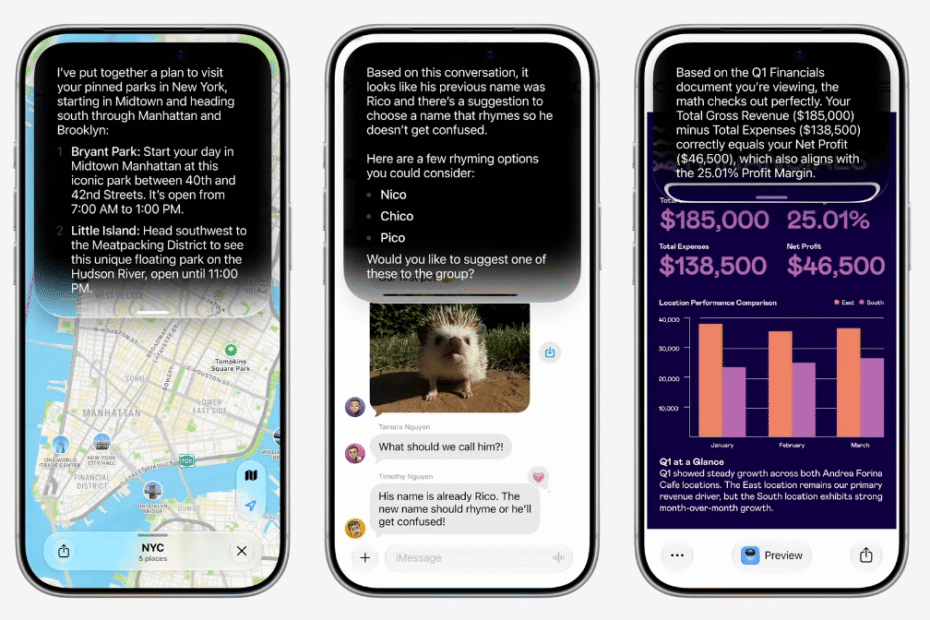
For years, Apple has faced criticism for lagging far behind in the AI race. Skeptics claim that Apple’s unclear AI roadmap has eroded its competitive advantage, with Wall Street analysts warning that the shortfall could soon dent iPhone sales. The company has now revealed what it calls its most significant AI rollout yet: Siri AI, which integrates fresh automated features—powered by a partnership with Google Gemini—directly into the core of its operating system. The question is whether this will finally quiet the chorus claiming Apple is “losing” the AI race. Honestly, no one has a clue. Yet perhaps that very question is misguided. A more relevant question could be: will Apple users actually utilize these features, and if so, will that benefit Apple’s business? Before tackling that question, it’s worth highlighting an interesting remark made by Craig Federighi, Apple’s senior vice president of software engineering. “Some seem to be rushing ahead, apparently chasing AI just for the sake of AI, with little thought for the people — all of us — it’s ultimately supposed to serve,” Federighi said in his speech. At Apple, our mission has always been to transform the power of cutting-edge technology into accessible, intuitive products that serve everyone. The thinly veiled defiance on display here appears to be both a reaction to Apple’s “behind-on-AI” critique and an attempt to recognize the deeply mixed — and, per some surveys, increasingly negative — feelings that many consumers hold toward the AI industry.