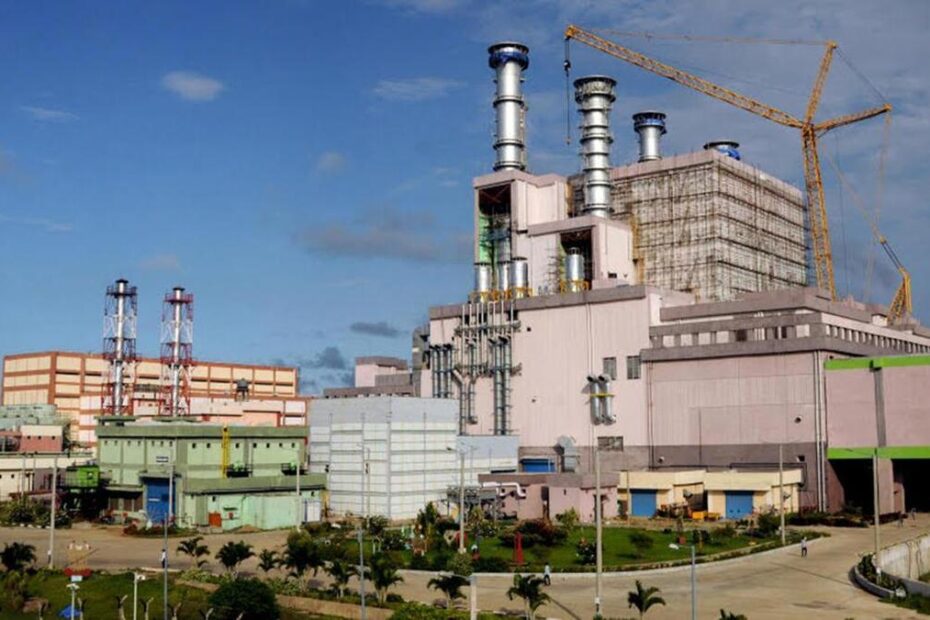
Among other things, the White Paper on Kerala’s fiscal health, tabled in the State Legislative Assembly on June 4, has reopened the debate on whether the State should have nuclear power plants to boost internal power generation.
Drafted by a panel headed by former Cabinet Secretary K.M. Chandrasekhar, the document lists nuclear power as one of the sources that Kerala should explore in adopting a “long-term strategy” for energy security. “This requires actively facilitating and incentivising investment in diverse energy sources, including solar, hydel and nuclear power, while also strengthening transmission and storage infrastructure,” it notes.
Elsewhere, the 195-page White Paper expands on the subject: “Significant growth demands a substantial increase in power generation capacity; 6000 MW through solar power, 8000 MW through pumped hydro-electric projects and even more through closed-loop reactors developed by Bhabha Atomic Research Centre (BARC) and through small modular reactors.”
The previous Left Democratic Front (LDF) government never made any policy announcement regarding nuclear power plants, although the Kerala State Electricity Board (KSEB) was reportedly involved with certain proposals at one point. In September 2024, at a discussion organised by the Sasthra Vedhi, V.D. Satheesan, the current Chief Minister who was then the Leader of the Opposition, had opined that the pros and cons of nuclear power plants should be carefully examined before jumping to a conclusion.
State government sources say that Central agencies are ready to go ahead with projects in Kerala if the government provides the necessary land. However, a section of power sector experts and environmentalists strongly argue that Kerala should work on solar power and pumped storage projects (PSP) rather than opting for nuclear stations which carry inherent risks.
A touchy subject
For decades, nuclear plants have been a touchy subject in Kerala. Disasters such as the ones in Chernobyl (1986) and Fukushima (2011) and questions related to the safe disposal of radioactive waste have accentuated concerns regarding the establishment of a plant in the densely populated State. Throughout the 1970s, 1980s and the 1990s, questions related to nuclear plants had come up in the Kerala Legislative Assembly as the Union government scoured potential locations. In the past, Kerala has also witnessed large-scale protests against nuclear facilities, notably the Peringome anti-nuclear struggle in the early 1990s.
Another factor that kept discussions on nuclear energy alive in Kerala has been the reported presence of thorium deposits along the State’s coast. One of the earliest questions regarding their exploitation, incidentally, was raised in the Travancore Sri Mulam Assembly in 1946, as Assembly records show.
More recently, nuclear power plants re-entered public discussion in 2024 and 2025 when Union Finance Minister Nirmala Sitharaman, in the 2024-25 Union Budget, announced plans for Bharat Small Reactors, and research and development of Bharat Small Modular Reactor and new nuclear energy technologies. Soon afterwards, it was reported that the KSEB was exploring the possibility of having nuclear power plants, although the then LDF government did not make any policy announcement regarding it. Potential locations on the KSEB list apparently included Athirappilly in Thrissur district and Cheemeni in Kasaragod.
In January 2025, a discussion paper on a regulatory framework for renewable energy published by the State Electricity Regulatory Commission also drew attention as it urged Kerala to explore the potential of small modular nuclear power plants.
In September 2025, the then LDF government asked the Director, Energy Management Centre – Kerala to conduct a ‘model study’ on using thorium deposits for future energy generation. The official was expected to visit Kalpakkam in Tamil Nadu, the location of India’s first indigenous Fast Breeder Reactor (500 MWe), but clearance for the visit is yet to materialise.
Published – June 06, 2026 06:58 pm IST
Email
SEE ALL
Remove