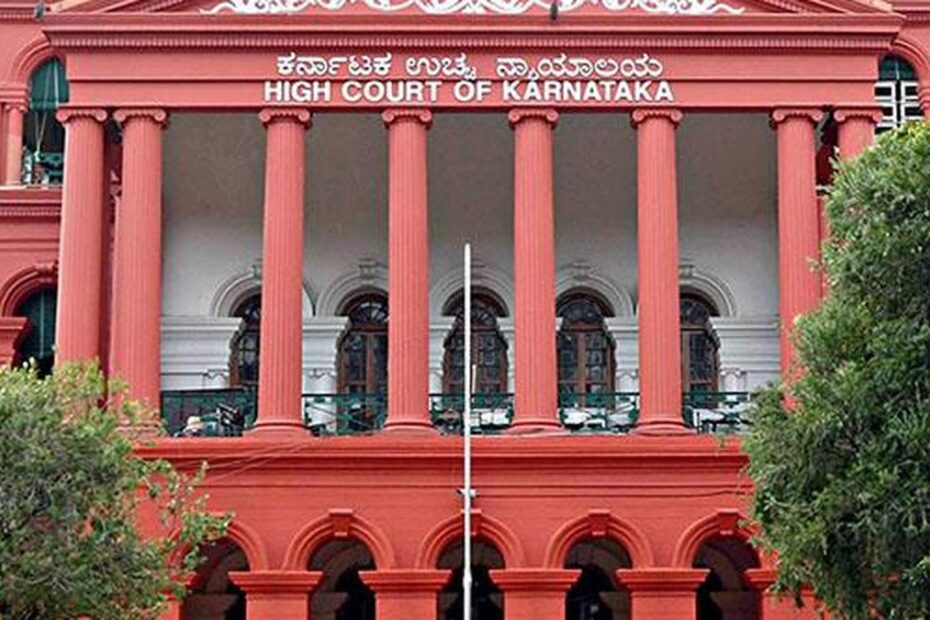
Observing that “clandestine funding of extremism is among today’s gravest national security threats”, the High Court of Karnataka on Wednesday (July 1, 2026) refused to interfere with a criminal case against six persons linked to U.S.-based Christian missionary The Timothy Initiative (TTI), under Unlawful Activities (Prevention) Act, 1967 (UAPA) for illegally using foreign-issued debit cards to withdraw and channel funds in India’s Left wing extremism-affected areas, bypassing regulatory mechanisms.
Justice M. Nagaprasanna passed the order on July 1 while dismissing the petitions filed by Micah Mark, Jonathan S. Rajan, Ajit Verghese Mathai, Varghese Chacko, Bablu Kurmi, and Supreme Joy, all associated with the TTI’s India activities.
The petitioners had challenged the First Information Report (FIR) registered by the Kothanur police in Bengaluru city on June 11, 2026 against the petitioners and the TTI based on the letter written by the Enforcement Directorate (ED) to the State Police Chief on May 6, 2026 requesting registration of criminal case against them.
The main contention of the petitioners was that ED lacked statutory authority to share information with Karnataka police for registering the FIR while arguing that Section 66(2) Prevention of Money Laundering Act (PMLA), 2000, permits sharing only for PMLA offences, not offences under UAPA, and the Section 37 of the Foreign Exchange Management Act (FEMA), 1999 do not empower the ED to share information, secured during its search and seizure operations, with other agencies.
However, the Court rejected these arguments while holding Section 66(2) expressly empowers the ED to share information when the ED forms an opinion that provisions of any other law stand contravened. Accepting the petitioners’ interpretation would amount to reading the law “into irrelevance and rendering the legislative intent nugatory”, the Court said while observing that the provisions of the PMLA and the FEMA must be “read in tandem”.
Pointing out that this is not a case warranting exercise of inherent jurisdiction to nip the crime in the bud, the Court said that “the case concerns national security. National security is the invisible architecture upon which the sovereignty, stability and constitutional order of a nation rest. One of the gravest threats to National security in the present times is, the clandestine funding of extremism.”
Funding, the Court, therefore, “becomes the oxygen that enables extremist movements to survive and proliferate. The danger of extremist financing lies not merely in the money transferred, but in the consequences it unleashes. Left unchecked, such funding can transform ideological extremism into organised violence, threatening national unity and public safety.”
Modus operandi
Micah Mark, the accused number 2, operated as a key financial facilitator for TTI’s alleged illegal network in India. His modus operandi involved multiple international trips, each time returning to India with foreign debit cards issued by Trust Bank, USA. On April 18, 2026, he was intercepted at Kempegowda International Airport in Bengaluru in possession of 24 such cards, the Court noted from the FIR.
All the cards were deliberately printed with the generic fictitious name “Santosh Kumar” to evade suspicion and circumvent KYC norms, hiding the real users. Investigations revealed that over 1,000 such cards had been distributed across India over several years, it was stated in ED’s letter.
Mark coordinated systematic withdrawal of funds, around ₹10,000 per withdrawal, through ATMs. After his interception, all back-end data from US servers were deleted through the TTI Global portal (www.ttiglobal.org), which subsequently became inaccessible to Indian users, amounting to destruction of evidence, the ED’s letter alleged.
The Court noted from the ED’s letter that investigations revealed that between November 2025 and April 2026, approximately ₹92.55 crore (US $ 9.99 million) was allegedly withdrawn and utilised in India using such cards contrary to law, and nearly ₹44 crore was withdrawn using similar methods across Karnataka, Chhattisgarh, Assam, and other states, between January 2024 and March 2026.
While observing that “the courts must be circumspect in stifling investigation, particularly where allegations touch upon issues of economic subversion intertwined with national security”, Justice Nagaprasanna said that in the nature of accusations made against the petitioners, the “investigation is not merely permissible – it becomes imperative”.
Published – July 01, 2026 01:42 pm IST
Email
SEE ALL
Remove