For decades, Tamil Nadu’s alliance politics operated on a simple understanding – smaller parties supplied votes, cadres, caste arithmetic and ideological legitimacy while the Dravidian majors kept power almost entirely to themselves. The arrangement survived because the system itself seemed permanent.
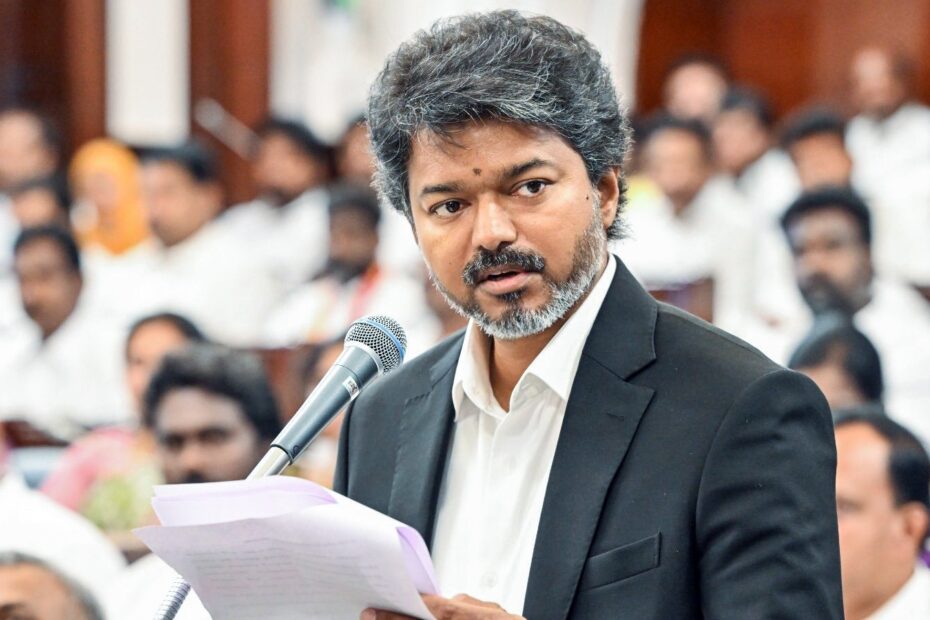
Cut to the 2026 Assembly elections, which the TVK led by C Joseph Vijay clinches as it makes a stunning electoral debut. And within days of Vijay’s victory, the old alliance architecture began collapsing with surprising speed and little sentimentality.
Advertisement
On Thursday, the Indian Union Muslim League (IUML) announced that its MLA A Shahjahan would join the Vijay Cabinet. The Congress has already entered the government after 59 years. The Viduthalai Chiruthaigal Katchi (VCK), after long deliberations, also joined the Vijay ministry Friday through its MLA Vanni Arasu. The CPI and CPI(M) continue to support the government from outside.
The poll outcome is politically startling not merely because Vijay formed Tamil Nadu’s first post-poll coalition government in the Dravidian era, but because one electoral upset has left both the DMK and the AIADMK looking suddenly isolated inside a system they had once controlled almost entirely.
Dravidian bigwigs’ isolation
And beneath the moral language now emerging from all sides lies a quieter, older question: why were these allies willing to leave so quickly? One answer may be painfully simple. For nearly six decades, neither the DMK nor the AIADMK truly evolved a culture of meaningful power-sharing.
Advertisement
Allies campaigned, transferred votes, defended coalition governments and absorbed ideological contradictions. But ministerial power, administrative influence and long-term political growth remained tightly guarded by the Dravidian majors. Coalition partners often functioned like tenants in somebody else’s political house. Now, many of them appear to have decided that if a new landlord has arrived, there is little emotional reason to stay loyal to the old one.
Some Congress leaders were unusually candid about it. “The Congress cadres have been striving for power for the last 59 years,” the All India Congress Committee (AICC)’s Tamil Nadu in-charge Girish Chodankar said Thursday, calling the party’s move to join the Vijay Cabinet a “turning point” in Tamil Nadu politics. Congress MP Manickam Tagore put it more bluntly: “Tamil Nadu is the only state where we worked for others’ victory but had to sit outside when the elections were over.”
Tagore thus sought to describe the structural frustration that had quietly accumulated among allies across decades. The DMK’s isolation today is therefore not merely electoral. It is relational.
Only weeks ago, these same parties contested elections under the DMK-led Secular Progressive Alliance. They used the DMK’s organisational network, campaign machinery and resources. Yet within days of the results, several of them crossed over to sustain a Vijay-led government. To many inside the DMK, the speed felt brutal.
But such discomfort was aggravated by revelations that sections of both the DMK and the AIADMK had themselves explored an extraordinary post-poll arrangement to prevent Vijay from taking power. What was once dismissed as rumour slowly became a political fact through public statements, leaks and factional accusations. The plan failed. But the attempt itself altered Tamil Nadu politics.
For the DMK, which had spent years portraying the AIADMK as merely an extension of the BJP, the reported backchannel conversations with its arch rival damaged its ideological credibility. For former chief minister M K Stalin – himself wounded by a defeat in his own constituency, and a leader rarely inclined toward moves that do not carry some form of public legitimacy – even entertaining such an idea reflected the depth of vulnerability within both the party and his immediate political as well as family circles.
Body blow for AIADMK
For the AIADMK, the poll fallout proved even worse. The party is now vertically split.
One faction led by Edappadi K Palaniswami or EPS insists that it defended party principles and opposed the Vijay government. The rebel party faction led by leaders like former ministers S P Velumani and C Ve Shanmugham accused EPS of first exploring a DMK-supported government himself before changing course.
Then came the second collapse. The rebels, after supporting Vijay during the trust vote and reportedly negotiating for Cabinet berths, expected entry into government. Instead, Vijay appears to have chosen another route entirely: a coalition anchored by the Congress, IUML and VCK – parties that strengthen his secular image and reduce accusations that the BJP is entering his government indirectly through the AIADMK rebels.
The CPI(M) openly warned that it would reconsider support if rebel AIADMK MLAs were accommodated. The VCK too sought assurances. TVK eventually stepped back from the rebel option.
For the rebel AIADMK camp, the rejection was politically devastating. Their gamble now risks leaving them suspended between two collapsing structures: distrusted by the official AIADMK and still outside the TVK government they backed in the trust vote.
There is irony everywhere in this transition. The DMK and the AIADMK once dismissed Vijay as politically immature, overly cinematic and organisationally weak. Yet, today both parties appear trapped reacting to his victory rather than shaping the post-election narrative themselves.
Even the calculations of “Delhi” seem to have been unsettled. Multiple AIADMK leaders privately believed that a section of the rebel faction, many seen as politically closer to the BJP leadership, could eventually enter government through the TVK and provide leverage within the new regime. That route now appears blocked, at least temporarily.
Vijay govt’s optics
Instead, Vijay has chosen to launch his government with the optics of a broad secular coalition, while carefully retaining ideological ambiguity for himself. This does not necessarily make the new coalition stable.
The contradictions remain obvious. The Congress, IUML and VCK won many of their seats using the DMK’s electoral ecosystem and anti-TVK campaign messaging. Their entry into Vijay’s Cabinet carries a degree of transactional discomfort that even some supporters privately acknowledge. But politics often punishes emotional assumptions faster than moral inconsistencies.
What Tamil Nadu may be witnessing now is not simply the rise of a new entrant but the exhaustion of an old arrangement. The Dravidian majors were prepared for defeat. What they perhaps did not anticipate was how quickly defeat would splinter loyalties around them.
And that may ultimately be the deeper shift of 2026: not merely that Vijay won power, but that the ecosystem around it suddenly stopped looking permanent.