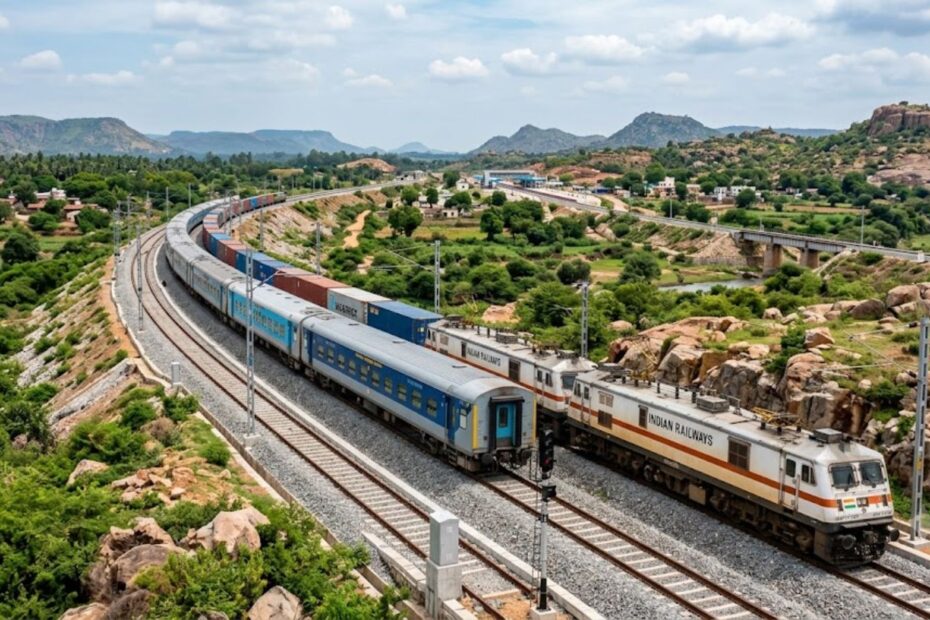
Two new railway lines approved by the Cabinet will strengthen rail connectivity between Karnataka and Andhra Pradesh. (Image generated using AI)
Ballari-Guntakal railway line expansion: The Cabinet Committee on Economic Affairs (CCEA) on Friday approved a railway project worth around Rs 1,264 crore to build the third and fourth railway lines on the Ballari-Guntakal section connecting Karnataka and Andhra Pradesh.
The project will cover three districts across Karnataka and Andhra Pradesh and will add around 46 km to the Indian Railways (IR) network.
“The proposed multi-tracking project will enhance connectivity to approximately 99 villages, which are having a population of about seven lakhs. The capacity enhancement will improve rail connectivity to several prominent tourist destinations across the country, including Ballari Fort, Sri Kumara Swamy Temple, etc,” the Ministry of Railways said in a statement.
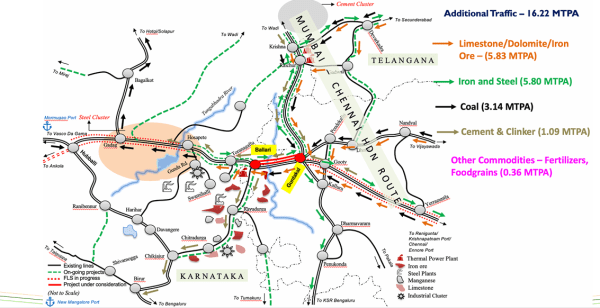 Route map of 3rd and 4th railway line project on Ballari-Guntakal section (Image: PIB)
Construction of 3rd and 4th Line of Ballari-Guntakal section
The third and fourth railway lines on the Ballari-Guntakal section will include a 762-metre mega bridge over the Vedavathi River, along with seven major bridges and 52 minor bridges. The project is expected to be completed within three years.
Why the Ballari-Guntakal railway line project is important
According to Railways, the third and fourth lines on the Ballari-Guntakal section will increase capacity on a key freight route used to transport commodities such as iron ore, dolomite, limestone, iron and steel, coal, fertilisers and foodgrains. The project is expected to add freight carrying capacity of about 16.22 million tonnes per annum (MTPA).
The multi-tracking project is also expected to streamline train operations, reduce congestion and improve the overall efficiency of the rail network.