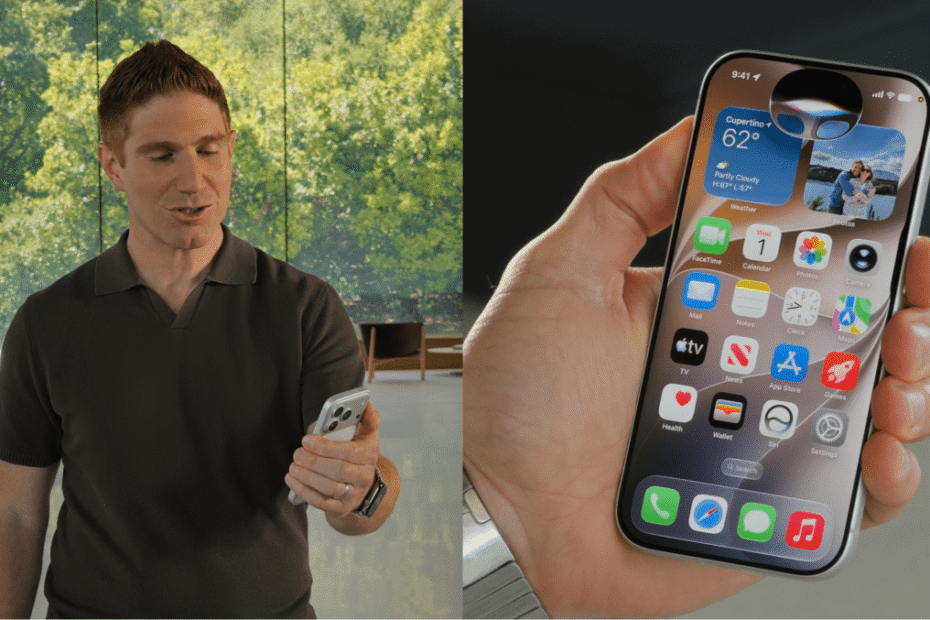
Apple’s 103rd Worldwide Developers Conference had the vibe of a spouse proudly rattling off every last item on their long-overdue honey-do list that they’d finally crossed off. Instead of unveiling anything fresh or thrilling, Apple used its keynote to highlight refinements to last year’s “Liquid Glass” design, a major revamp of its notoriously poor search, upgrades to the Playground feature, and more. Most notably, two years after promising but failing to deliver a smarter Siri, the company finally demonstrated a completely overhauled version of its AI voice assistant. Yet the most revealing part wasn’t anything Apple actually announced. It was its way of displaying certain things. Many of the Apple Intelligence demos showed a person standing with their phone, tapping buttons or issuing voice commands in real time, while a second camera displayed the device’s responses. These were not live, anything-could-go-wrong demonstrations onstage—they were pre-recorded. But they looked far more like proof of working features than what Apple showed at WWDC 2024, when the company unveiled Apple Intelligence and a new Siri to the world through slickly produced videos that turned out to be more promise than product. Apple WWDC 22 iOS 23 demoImage Credits:Apple/screenshot. This presentation approach drew attention, as users on X commented on Monday likening today’s keynote to the much-criticized “vaporware” demos of 2024. At the time, Apple claimed those features would be coming soon to anyone who upgraded to an iPhone 15 Pro or a newer device equipped with an M1 chip or better. But in March 2025, Apple told Daring Fireball that delivering the features showcased in the production video would take longer than expected. Not long afterward, the Cupertino firm was hit with a federal lawsuit accusing it of false advertising regarding the capabilities it demonstrated at the 2024 event—a case that posed a genuine threat to a brand long built on the assurance that its products simply work. Last month, Apple settled the suit for $250 million without admitting any liability. Monday’s presentation seemed crafted, at least partly, to prevent a similar situation from occurring again.