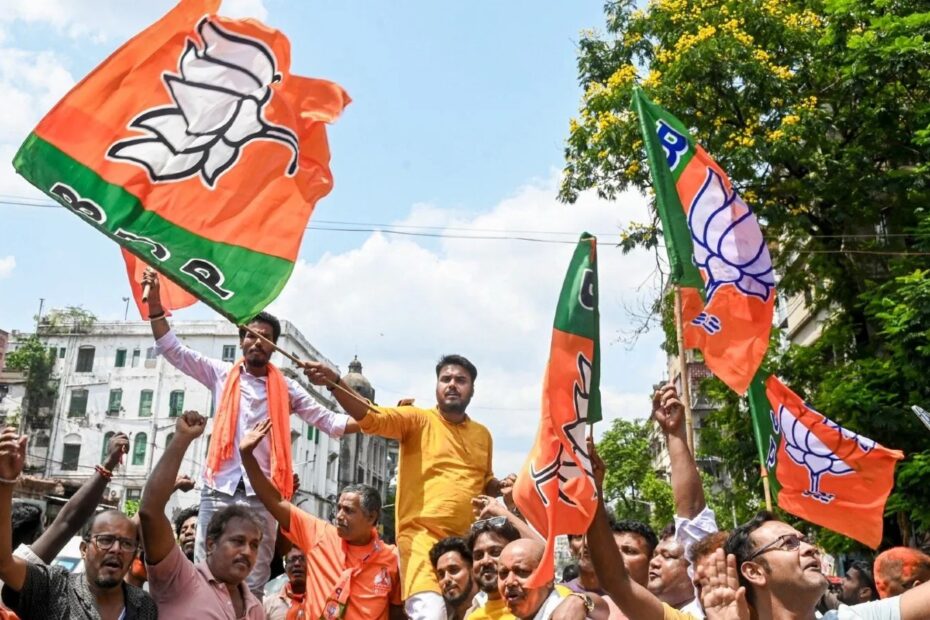
The BJP government in West Bengal has moved to bring to the foreground Bengali language and culture, signalling its intent to continue its strategy to shed its “outsider tag” after its landslide victory in the recent Assembly elections.
The move is being viewed in political circles as part of the BJP’s broader efforts to project itself as a party respectful of Bengal’s culture and linguistic identity. In the run-up to the Assembly polls, the BJP was repeatedly labelled by the then incumbent Trinamool Congress (TMC) as an “outsider which did not understand the culture of Bengal”.
Advertisement
Chief Minister Suvendu Adhikari on Monday announced in the Assembly that Bengali would become mandatory at all levels of the state administration from September 1.
According to Adhikari, Bengali will be the primary language for all state government communications, with internal official correspondence required to be conducted in the Bengali language. Communications with the Centre, however, will be issued in both Bengali and Hindi.
Adhikari also disclosed a letter sent by Union Home Minister Amit Shah, in which Shah underscored the importance of promoting Bengali in the governance of Bengal. While advocating greater use of Bengali in the state’s administrative framework, Shah also recommended increased use of Hindi for inter-state and Centre-state official communication.
Advertisement
“This decision has been taken to further strengthen the use of the Bengali language in the state’s official system,” Adhikari told the House, adding that all departments, autonomous bodies and administrative institutions would standardise official communication in Bengali. He also said police FIRs would be registered in Bengali to improve accessibility for citizens.
BJP bid to ‘fit in’
During the Assembly campaign, Prime Minister Narendra Modi and Shah visited several Kali temples across the state, while the BJP prominently used slogans such as “Jai Maa Kali” and highlighted Bengali cultural symbols and food habits, including Maach-Bhaat (fish and rice), in its outreach. After assuming office, Adhikari chose to take oath on May 9, the birth anniversary of Rabindranath Tagore.
The outreach came after TMC chief and then CM Mamata Banerjee repeatedly alleged that a BJP government would threaten the Bengali language and the state’s cultural identity. Trinamool leaders frequently criticised BJP leaders for their pronunciation of Bengali and accused the party of attempting to impose a cultural agenda from outside the state.
BJP leaders now argue that the government’s latest decision disproves those allegations.
“I thank Adhikari for recognising Bengali as an official language. Where are those who used to say that if the BJP came to power, the Bengali language would no longer exist?” said Union Minister and former state BJP president Sukanta Majumdar.
State BJP chief spokesperson Debjit Sarkar said the move marked a “historic correction”. “It took 75 years to make the use of the Bengali language mandatory in West Bengal. This was done after Adhikari became CM. Those who claimed the BJP is anti-Bengali have been proven wrong,” he said, adding that critics alleging “saffronisation” would also be proved wrong.
The Opposition, while welcoming the decision, urged the government to ensure its effective implementation.
Senior CPI(M) leader Rabin Deb said making Bengali the language of administration was a positive step but questioned whether it would be implemented in practice. “If government work is conducted in the mother tongue, that is certainly a good thing. But issues such as food, employment, education and housing remain the primary concerns of the people. It remains to be seen how much of this policy is actually implemented,” he said.
The announcement has also prompted demands for greater linguistic accommodation in the state’s hill regions.
More demands
Gorkha Janmukti Morcha chairman Bimal Gurung wrote to the Chief Minister requesting that Nepali should also be used in government forms, applications and official correspondence in the Darjeeling Hills, Terai and Dooars.
Gurung noted that Nepali, recognised under the Eighth Schedule of the Constitution, is the mother tongue of a large section of the population in these regions, adding that bilingual administration would improve accessibility and governance.
Responding to the request, Adhikari said the state government “holds the linguistic heritage of the Nepali-speaking community in the highest regard” and acknowledged the language’s constitutional status. Assuring Gurung of his government’s commitment to inclusive governance, he said the administration would take the necessary steps to facilitate the official use of Nepali in the above regions.