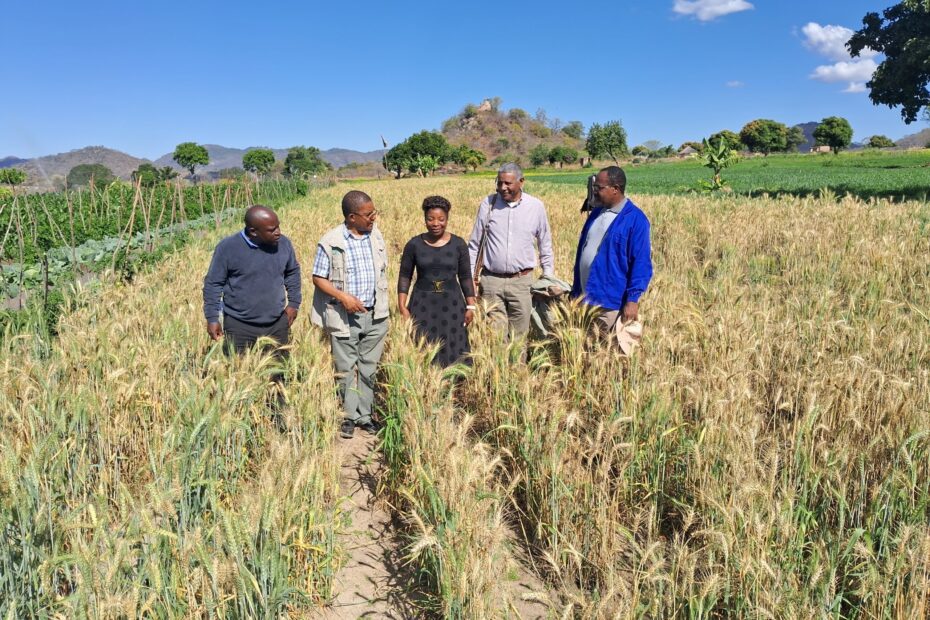
Zimbabwe is among several countries beginning to benefit from the health advantages of biofortified wheat seeds. Farmers in Zimbabwe collectively produce nearly 550 000 tons of wheat each year, the majority of whom are smallholders with less than one hectare of land. In remote regions, families consume wheat products derived from grains that are known to be low in essential micronutrients, contributing to poor nutrition. “The tendency to consume wheat directly on the farms and in the communities where it is grown means that fortified wheat from commercial mills is unlikely to reach poor rural communities.” Flavio Breseghello, director of the global wheat program at CIMMYT. Research indicates that improvements in food security in Zimbabwe over the last several decades can be partially attributed to rising cereal production. However, malnutrition remains a critical issue, especially among rural subsistence populations. According to the Global Hunger Index 2019, 36% of children in Zimbabwe suffer from stunting, an indicator of chronic undernutrition. This situation highlights an important reminder: a simple increase in food availability does not guarantee that the population is receiving the necessary nutritional content to escape the poverty cycle, a growing concern often referred to as “hidden hunger.” Furthermore, most popular wheat varieties grown in the country have become increasingly vulnerable to climatic stresses and new diseases or more virulent strains of existing pathogens. Field evaluation of high-zinc wheat trials in Zimbabwe (Photo:CIMMYT).Start with the Seeds Significant advancements are being made in crop breeding to enhance the nutrient quality, yield, and other farmer-preferred traits of staple grains. The seeds themselves can act as agents for an integrated transformation of food systems. Biofortification, the development of micronutrient-dense staple crops through traditional breeding methods, has emerged as a powerful tool in combating hidden hunger. The Future is Looking Brighter In 2025, CIMMYT collaborated with the Crop Breeding Institute (CBI) under the Department of Agricultural Research, Education and Specialist Services (DRESS) to release a new biofortified wheat variety named Honde in the country. This variety not only has an increased zinc content but also exhibits superior yield and resistance to prevalent diseases matures 1-2 weeks earlier when compared to existing varieties and over 70 ppm Zn concentration in the experimental plots. The new varieties are tailored to the environmental conditions of various wheat-growing regions in Zimbabwe, addressing issues such as wheat diseases and heat stress while ensuring appropriate processing quality for diverse wheat-based food products. Field evaluation of high-zinc wheat trials in Zimbabwe (Photo: CIMMYT).Setting Targets and Hitting the Mark Biofortified wheat offers several potential advantages as a vehicle for delivering micronutrients in the diets of populatio Read More