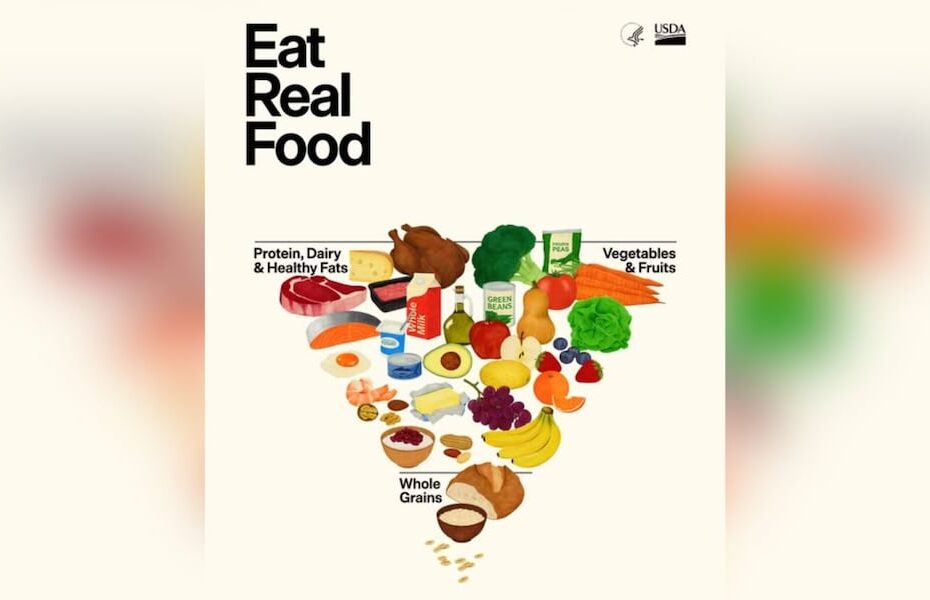
ROCKFORD, Ill. (WIFR) – Some heads began to turn as the U.S. Department of Health and Human Services rolled out the new dietary guidelines for Americans. White House announces new food pyramid(White House)The new dietary guidelines for Americans mark the most significant overhaul of federal policy in decades.But, how much is changing? One stateline health expert says the new policy follows what health experts have stressed for years.The U.S. Department of Agriculture says the nation faces a national health emergency, stating 90% of healthcare spending goes toward treating chronic disease, much of it linked it diet and lifestyle. More than 70% of American adults are overweight, and nearly one in three adolescents has prediabetes. Christine Gillette, a Mercyhealth clinical dietitian, says it’s not so much an emergency, rather it’s bringing more awareness to eating healthy.“This is something that has been going on for several years,” explained Gillette. “This is actually what health and nutritional professionals have been doing all along, now it’s being like we’re in an emergency, fight or flight mode.”She goes on to say registered dietitians have always been touting eat more fruits and vegetables, eat more whole grains, have leaner cuts of meat and eat and drink your dairy. She says that part is not new; what differs is how it is being explained.One stateline resident, Tammy Clay, says she has always followed the recommended nutrition guidelines, especially as both she and her husband battle cancer. She adds that she’s open to working with the new nutrition policy too.“Nutrition and fruits and vegetables are good for us. We try to stay on track with our diets and stuff, so it works out for us,” explained Clay. ‘It’s just good for everybody.”Gillette says, like always, it’s important to follow the basics. Eating fruits, vegetables, dairy and whole grains. “I really have always focused into that myplate.gov because it guides that person, ‘what is a serving size, how much are we supposed to have,’” said Gillette.The new guidelines also put a big emphasis on protein. The Health and Human Services Department says, “these guidelines reflect gold standard science by prioritizing high-quality, nutrient-dense protein foods in every meal. This includes a variety of animal sources, including eggs, poultry, seafood, and red meat, in addition to plant-sourced protein foods such as beans, peas, lentils, legumes, nuts, seeds, and soy.”“Too much of a good thing is not always a good thing because they are nutrient-dense,” said Gillette.She says when it comes to foods like red meat, it’s important to remember serving sizes are specific to each person.“The message that I would like to send home is to eat a wide variety of foods, still, prepared a wide variety of ways, and try your best to focus in on that plate method that works for your home,” Gillette explained.Gillette offers a lot of information regarding nutrition Read More