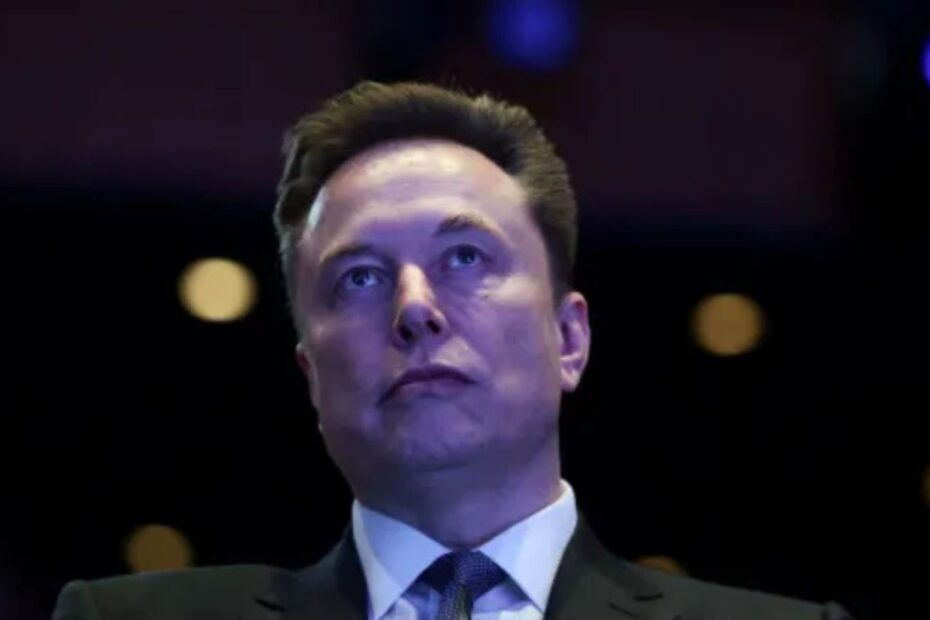
At a time when protests against Chief Election Commissioner (CEC) Gyanesh Kumar have put the national capital’s law-and-order machinery under pressure, the RSS-affiliated Swadeshi Jagran Manch (SJM) on Tuesday asked the government to block Elon Musk’s Starlink from launching commercial satellite broadband services in India.
SJM argued that Starlink’s technology could make internet restrictions and security-related surveillance difficult. “Currently, India is grappling with various law-and-order challenges. In such situations, internet-based social media often fuels rumours and anti-national narratives,” SJM national co-convener Ashwani Mahajan said in a statement.
He further argued that disrupting internet services is often essential to maintain law and order during “instances of separatism, terrorism, riots, protests, and similar events”, and urged the government not to grant Starlink permission to operate.
Also Read | ‘Dear Prime Minister Ambani’: Musk doubles down on Starlink delay row
Demand amid Musk attack on Ambani
The demand comes days after Musk publicly targeted Reliance Industries chairman Mukesh Ambani over delays in Starlink’s India launch. Musk first alleged that “certain oligarchs” were blocking Starlink to preserve their “monopolistic chokehold” and subsequently asked on X: “Is Ambani the real boss of India?”
The government rejected the allegation, saying its regulatory framework was “fair and non-discriminatory” and that suggestions of discriminatory treatment were “baseless and misconceived”.
Significantly, the government has clarified that Starlink, Reliance Jio and Bharti-backed Eutelsat OneWeb have received licences, but must demonstrate compliance with security conditions before proceeding to spectrum assignment and commercial operations. Security assessments of all three are underway and they are “broadly at the same regulatory stage”, the Ministry of Communications has said. Union Minister for Communications Jyotiraditya Scindia subsequently said the security clearances fell within the home ministry’s domain.
Also Read | Elon Musk says Starlink to serve rural India: Why its launch faces delays
SJM flags Starlink’s satellite architecture
SJM’s statement assumes significance amid the ongoing protests in Delhi, where authorities have taken a series of preventive measures aimed at restricting mobilisation and maintaining public order.
Story continues below this ad
The SJM contrasted Starlink’s technology with existing telecom networks, arguing that incumbent operators can suspend or restrict internet services in specified areas when directed by the government and cooperate with security and investigating agencies.
The SJM also said that Starlink’s satellite architecture presented a particular challenge because its satellites can communicate with one another through laser links, allowing data to move between satellites before reaching a ground station.
According to the organisation, the government must ensure that internet traffic originating in India cannot bypass domestic gateways and that Starlink can precisely restrict its services in a specified geographical area if directed to do so during a security or law-and-order situation.
“A key regulatory condition is that Starlink must be able to precisely restrict its services at the government’s behest; however, Starlink has not committed to meet this requirement, or its technology may not permit it,” the SJM claimed.
Story continues below this ad
Also Read | Why Elon Musk has slammed ‘certain oligarchs’ for Starlink’s India launch delay
Raises interception, enforcement concerns
It argued that Indian internet traffic travelling through foreign infrastructure could make lawful interception and enforcement more difficult. Satellite internet terminals, it said, could also potentially be used by insurgents, smugglers and other hostile actors outside conventional telecom networks.
The organisation also claimed that unauthorised Starlink terminals had been found in sensitive areas and that security agencies had recovered Starlink equipment during investigations.
The RSS affiliate used the controversy to make a larger case for domestic telecom and satellite-internet capabilities. It said incumbent telecom operators had cooperated with security and investigating agencies and their technology allowed services to be restricted when required by the government.
The statement effectively places the SJM on the side of the security argument advanced in favour of tighter controls over satellite internet at a time when Musk has publicly attacked what he describes as the influence of incumbent business interests. Reliance Jio and Bharti Airtel dominate India’s terrestrial telecom market while both also have satellite-internet interests. Jio has a satellite venture with SES, while Bharti is a major shareholder in Eutelsat, which operates OneWeb. Both companies had, however, also entered into agreements with SpaceX last year to explore distribution of Starlink services in India.
Story continues below this ad
Also Read | Musk vows affordable Starlink in India days before Ambani’s record Jio IPO
Promote indigenous options, send message to the US
The SJM argued that keeping Starlink out would provide an opportunity to accelerate the development of indigenous satellite internet capabilities, particularly for remote regions. “Even if there is a slight delay in launching indigenous satellite-based internet services, we would still be able to offer services far cheaper than Starlink while ensuring national security,” Mahajan said.
It also drew a parallel with its earlier opposition to Chinese telecom equipment makers Huawei and ZTE during India’s preparations for the rollout of 5G, saying its objections then too had been based on national-security concerns.
The SJM also linked its demand to India’s trade relationship with the United States. “Blocking Starlink would send a message to trade partners like the US: if they have the audacity to arbitrarily restrict Indian imports—such as handicraft products—by imposing high tariffs in the name of national security, then India is certainly within its rights to block Starlink based on its genuine national security concerns,” Mahajan said.
The organisation also hit out at Musk over his recent remarks, alleging that instead of addressing security-related issues concerning Starlink, he was trying to create public pressure on the government.
Story continues below this ad
“It appears that Starlink is perhaps not prepared to meet those specific requirements. Consequently, it seems Elon Musk is either attempting to secure the license by creating public pressure against the government or is making these statements out of frustration,” it said.