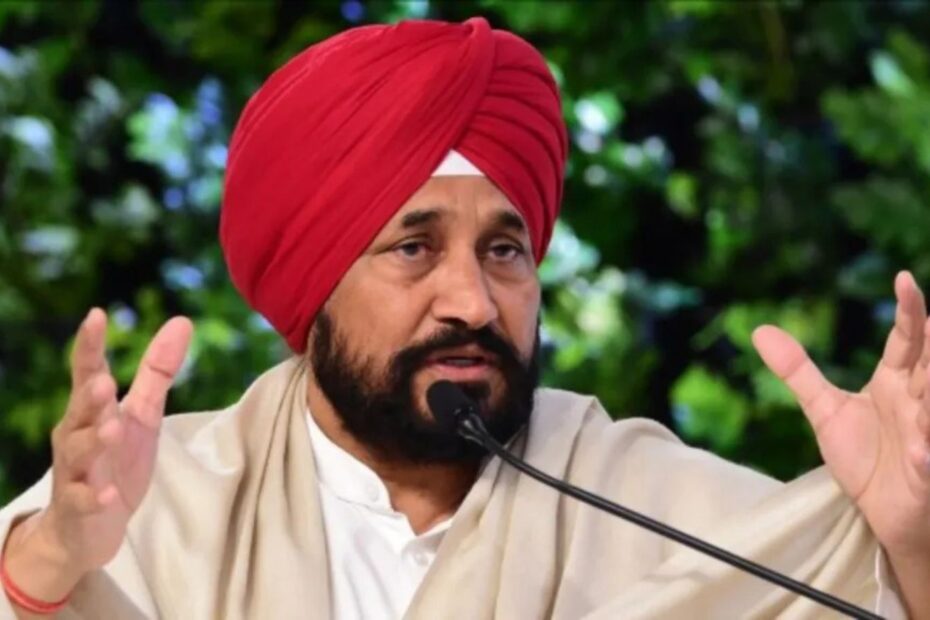
Of late, Jalandhar MP and former Punjab Chief Minister Charanjit Singh Channi has been at the centre of the Punjab Congress’s internal feud.
In an interview with The Indian Express, the Congress leader speaks about the problems plaguing Punjab, his vision for the state if the party comes to power, and the problem posed by gangsters, among other issues. Excerpts:
Advertisement
While the Punjab Police claims a large-scale crackdown on drugs – seizures of huge quantities of heroin and scores of FIRs – why does the Opposition still say ‘chitta’ (drugs) is easily available?
If the government claims that seizures have increased, it begs the question: where are the drugs coming from and why is the supply continuing? Seizures are important but cannot be a measure of success by themselves. We need to examine the supply chain. More importantly, we need to see why these (drug) networks continue to operate.
A 32-year-old man in a village near Chamkaur Sahib died after consuming drugs, leaving behind his wife, child, and parents. What can I tell the family when they come grieving to me?
Advertisement
I believe the Yudh Nashian Virudh campaign cannot be merely about hoardings, advertisements and political statements. The people need to see an impact on the ground.
Also Read | Sachin Pilot’s first Punjab test: Channi, Warring bury hatchet — for now — to take on AAP
If the Congress returns to power, what would first change in the police, transfers or accountability?
The first change has to be in the way that the police system functions. Punjab needs professional, accountable and politically insulated policing.
Transfers must not become a tool of political management while officers must have reasonable stability of tenure to deliver results. Accountability needs to be fixed at the entry-level, particularly at the district level. In the short term, we need stronger intelligence, better investigation and identification of the drug networks to act against organised crime.
There must be zero tolerance to political and institutional patronage of drugs and gangsterism. There also needs to be political accountability and a moral responsibility on leaders.
The ultimate objective is not more arrests and FIRs but to break the criminal ecosystem and create a Punjab where people can live safely, peacefully and with dignity.
The Centre has listed Amritsar, Gurdaspur, Tarn Taran, Ferozepur, Fazilka and Ludhiana as ultra-sensitive drug zones…
The Centre is absolutely right in identifying these districts as ultra-sensitive drug zones. But this is not the end of the conversation, it raises the question of responsibility.
Most of these districts are along the international border and the Centre has the responsibility of preventing drugs entering India. In 2021, the Centre expanded the BSF’s jurisdiction in border states to up to 50 km from the border. The Centre must answer what more is being done to stop the supply of drugs at the border.
Apart from the Pakistan border, drugs can also reach Punjab from neighbouring states such as Rajasthan and Gujarat. Border security and inter-state trafficking require coordination of central agencies. This is not to say the Punjab government can evade responsibility. What we have is a situation where the Centre and state keep blaming each other while drugs continue to percolate into our villages.
Do you agree with Punjab Governor Gulab Chand Kataria’s statement that drug trade would not last even 10 days without police and administrative support?
There is certainly a question on how drug trade can flourish for a long time if the enforcement and administrative system is functioning effectively.
No organised criminal network can survive with determined leadership, sound administration and clear execution of strategy.
Also Read | Amid Punjab leadership tussle, Channi skips key Congress meet for another MA exam
The AAP had promised to make Punjab drug-free within months of coming to power. Recently, Speaker Kultar SIngh Sandhwan admitted that the promise was not fulfilled. Why did the Congress not raise this?
The issue cannot be reduced to one statement by the Speaker. The reality is that young people are dying. That, in itself, is a serious indictment of the government’s failure in controlling the availability of drugs.
The Congress has consistently raised this issue through protests, campaigns, and by demanding concrete action. We will continue to do so.
What would your ‘100-day plan’ on drugs, and law and order look like?
At the heart of our approach would be political will, the courage to confront the drug mafia without fear or favour. The first 100 days would establish direction and accountability. The immediate task will be to break the supply chain and take firm action against those who profit from drug trade. Those already trapped in addiction should have immediate access to treatment, counselling and rehabilitation.
However, enforcement alone cannot solve the problem. We have to prevent the next generation from being addicted. That requires good education, employment opportunities, sports and other meaningful avenues. Society must be a part of a sustained campaign against drugs.
We also need to change our social attitude towards drugs. Our children must see classrooms, playing fields, and workplaces as their path to a better future. Defeating drugs requires a sustained effort beyond 100 days.
You recently told the Governor that Punjab is seeing ‘gangsterwaad’ while the right to protest is being crushed…
Law and order cannot be reduced to mere statistics or political claims. The real question is whether an ordinary Punjabi feels safe, gets justice and whether the law is equal for everyone.
First, the Gulzar Singh case. He made serious allegations against Finance Minister Harpal Singh Cheema and others in a video. While allegations against others were included in the FIR, those against the minister were not included in the same manner. Gulzar Singh’s son was reportedly not allowed to perform his final rites.
The investigation cannot depend on political position. Every allegation must be probed and if someone is innocent or there is any wrongdoing, the investigation must establish that.
Second, the alleged police treatment meted out to Mohanjit for waving black flags at Mann from a rooftop raises serious questions over the government’s response to dissent. Punjab needs a government that listens to its youngsters and not one that treats every criticism as a challenge to its authority.
Third is the case of Gurpreet Singh Sekhon (he has joined AAP), who has been termed a gangster, has several criminal cases against him and has been associated with a jail break.
What message is being sent out to Punjab’s youth by providing such a person with a political platform? It creates a perception of double standards. Gangsterism must never be allowed to acquire political legitimacy.
But the AAP says its government has arrested hundreds of gangsters and brought some back from abroad, including the first-ever from Europe…
I am not questioning the police for arresting gangsters… If the government has brought back accused persons through lawful extradition, it is their job.
That is not the issue. Four-and-a-half years ago, gangsterism was not dominating everyday conversations in Punjab.
The state cannot fight gangsterism on one hand, and allow gangster culture to acquire social or political legitimacy on the other.
How do you see the BJP’s Nasha Mukt Punjab Yatra?
Any campaign against drugs is welcome if it produces concrete results. But a yatra cannot be a substitute for effective action.
There is a shared responsibility between the state and the Centre to tackle the issue of drugs. Both governments need to answer for what is happening.
To (Union Home Minister) Amit Shahji and CM Bhagwant Mannji, I would say: “Tu idhar-udhar ki baat na kar, bata ki qafila luta kyun; humein rahznon se garaz nahi, teri rahbari ka sawaal hai (Don’t beat around the bush; tell me why the caravan was plundered. I have no concern with the bandits — the issue at hand is your leadership).”