As the principal Opposition Congress party’s MLAs created an uproar in the Haryana Assembly Tuesday over the ongoing state-wide strike by sanitation workers in a bid to corner the Nayab Singh Saini-led BJP government, Social Justice Minister Krishan Bedi told the House that the government has been engaged in talks with the striking workers and that it has already held six rounds of meetings with them.
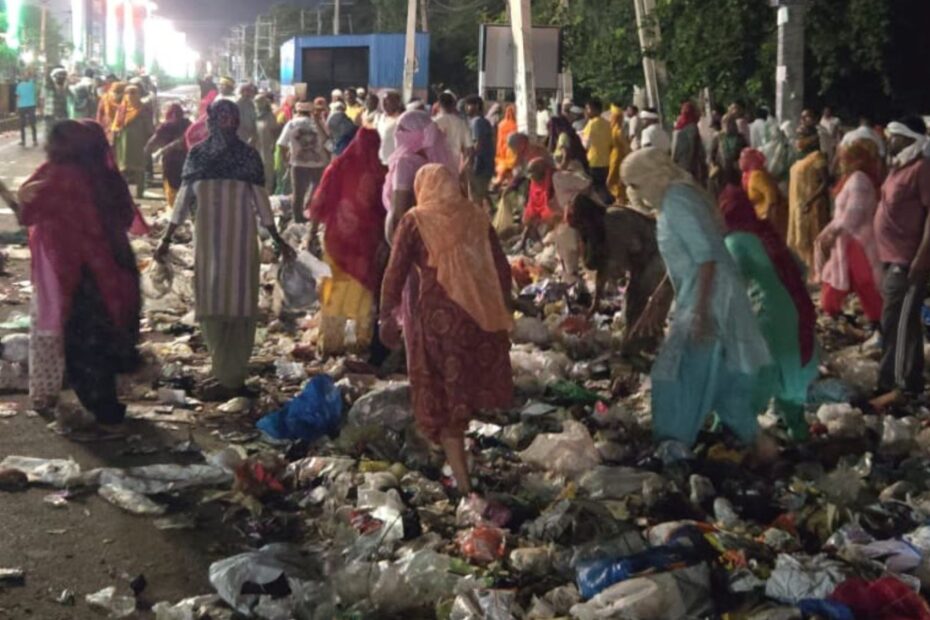
The strike by around 13,000 sanitation workers demanding regularisation of their jobs, which entered 28th day Wednesday, has severely disrupted the sanitation services in urban areas across the state, even resulting in clashes between them and local officials in several areas.
Advertisement
At least two ministers — Bedi and Urban Local Bodies Minister Vipul Goel — have been holding meetings with the agitating workers in their bids to resolve the standoff.
In several instances, local officials, accompanied by police personnel, attempted to clear accumulated garbage using JCB machines, only to be stopped by the protesting sanitation workers. Videos from some locations showed policemen trying to remove such obstructing workers with some protesters, including women, purportedly throwing garbage at them.
Also Read | Rs 3 crore homes, garbage-lined roads: Gurgaon hit by 21-day sanitation strike
At certain places, protesters were briefly detained and taken to police lines or stations or to neighbouring towns. Even FIRs have also been registered against some of them.
Advertisement
The Nagarpalika Karamchari Sangh, which is spearheading the agitation, alleged that the police personnel misbehaved or assaulted many women sanitation workers during the protests.
BJP vs Congress tussle
Raising the issue in the Assembly, five-time Congress MLA and Dalit leader, Geeta Bhukkal alleged that “the hair of women sanitation workers were pulled by police and they were dragged into their vehicles”.
As the Congress legislators raised slogans in the House in support of the striking workers, Bedi accused the Opposition of “provoking the agitators”, alleging that “they want to disturb the atmosphere of the state”.
Bedi said the Saini government has already accepted 12 of the workers’ 13 demands, adding that there were legal hurdles in accepting their demand for regularisation of their services.
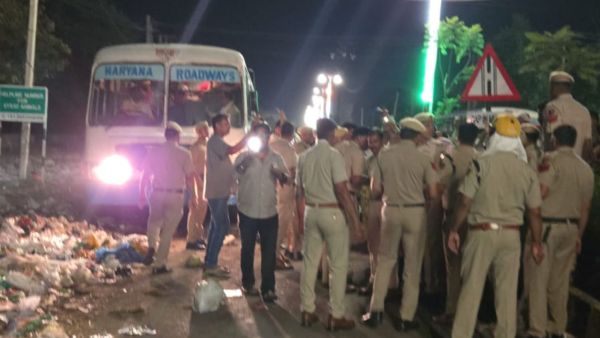 A confrontation took place between the sanitation workers and the officials in Hisar early morning during the ongoing strike recently. (Special arrangement photo)
Minister Goel had earlier said the government had sought the Advocate General’s opinion on the issue. “The court says that so many employees cannot be regularised in this manner. The high court says this would amount to backdoor entry. We have offered increased financial benefits, but they are not ready to accept it,” he said.
Chief Minister Saini said such issues had arisen during the previous Congress regime too. “Unlike turning away from these concerns, the BJP government is continuously working towards finding their solutions,” he said, accusing the Congress of trying to politicise the matter.
Valmiki factor
For the BJP, however, the concern goes beyond the deteriorating sanitation situation and the increasing clashes between the officials and protesters. The strike has significant political implications because a large section of sanitation workers belongs to the Valmiki community, which the BJP has been trying to woo in recent years.
Valmikis account for a significant section of Haryana’s Scheduled Caste (SC) population, a sizeable chunk of which has traditionally been considered part of the Congress’s base.
The BJP has however made massive efforts in recent years to expand its support among Valmikis and other SC communities. Dalits account for 20% of the state’s population.
Such caste dynamics assumed additional significance after the BJP government, in its very first Cabinet meeting after returning to power in the state in October 2024 for the third consecutive time, decided to implement the Supreme Court’s August 2024 judgment allowing states to sub-categorise the SCs/Scheduled Tribes (STs) to ensure grant of quota to more backward castes in these groups.
The Dalit groups associated with the leather industry, who have benefited significantly from reservation, are seen to have been part of the Congress’s traditional vote base in Haryana.
Against this backdrop, the sanitation workers’ agitation has emerged as a new flashpoint in Haryana politics with the Congress trying to corner the BJP government on the issue, accusing it of using force to suppress the strike.
In the Assembly, senior Congress legislator Ashok Arora suggested that the House pass a resolution seeking regularisation of sanitation workers’ services, offering the Congress’s support for such a move.
The BJP government seems to be increasingly coming under pressure in the absence of any breakthrough so far despite its repeated attempts to achieve it.
Bedi, who has referred to the protesting workers as “mera samaj” (my community), has announced that he will soon tour the state to meet workers and address their concerns.
Sanitation workers on the municipal rolls in Haryana currently get Rs 19,000 per month as wages. The Saini government has proposed to increase it to Rs 21,000.
Devi Das Valmiki, president of Dalit-A Mahapanchayat, said the ongoing agitation and the use of police force against protesters had angered Valmikis and could “alienate” the community from the BJP. “The women workers go for sanitation work at 6 am, when their children are still sleeping. What are they demanding? Just regularisation, like other employees, including guest lecturers. Why is the government not listening to them? What is their fault?” he said.