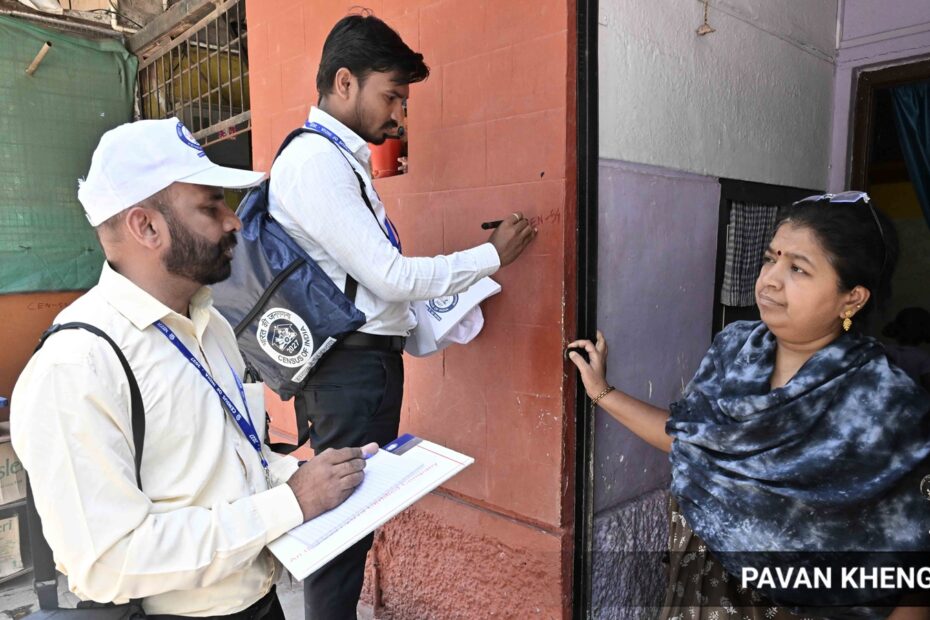
The counting of caste in the 2027 Census has become a political flashpoint with the government opting for an “open-ended question” format rather than a drop-down menu, and Leaders of Opposition in Lok Sabha and Rajya Sabha, Rahul Gandhi and Mallikarjun Kharge, slamming the decision, saying social justice policies cannot be effectively implemented without accurate data.
The Indian Express has learnt that two key government arms behind the exercise, Office of the Registrar General of India (ORGI) and Ministry of Social Justice and Empowerment (MoSJE), were not always on the same page, either.
Advertisement
Sources said Ministry officials expressed their willingness to share the list of OBCs, maintained by the National Commission for Backward Classes (NCBC), for the caste enumeration exercise at a key meeting on June 1. But the offer, sources said, was not reflected accurately in an initial draft of the minutes of this meeting prepared by the Registrar General’s office.
Also Read | No drop-down menu, caste census format to be open-ended
Following a pushback, the Registrar General’s office accepted a revised draft from the Ministry.
Sources said the Ministry’s offer was made at the meeting chaired by Registrar General of India Mrityunjay Kumar Narayan, and attended by Additional RGI Sunil Kumar, Ministry Joint Secretary Shailendra Kumar, and other officials.
Advertisement
On June 8, sources said, the Registrar General’s office circulated a four-paragraph note on the meeting. This note, sources said, stated: “Ministry officials informed that there was no Constitutional mandate to maintain a caste list and, therefore, it was not available with them.”
According to the note, the Ministry said it maintains the notified list of Scheduled Castes (SCs), comprising 1,258 entries, and the Central List of Other Backward Classes, comprising 2,483 entries, and these, if needed, could be provided to the Registrar General’s office.
Also Read | Census 2027 must count castes, not create them
The note, sources said, stated: “In view of the absence of any list of castes, enumeration of castes in Census 2027 may not be possible using any pre-defined list in the question in the Census 2027.”
Ministry officials told The Indian Express that they viewed the choice of words as a “trap”. “We felt the onus (of not going forward with a pre-defined list) was being shifted on us,” an official said.
On June 11, the Ministry sent an amended version of the note to the Registrar General’s office. This note, sources said, stated that Ministry officials “informed that as mandated by the Constitution, in relation to castes, it maintains the List of Scheduled Caste and Other Backward Classes”. “No separate list of ‘Castes’, other than the Scheduled Caste List and Central List of Other Backward Classes, is required to be maintained by the Department. The list of Scheduled Castes comprising 1,258 Entries has already been shared with ORGI vide letter dated September 25, 2025 and the Central List of Other Backward Classes, comprising of nearly 2,483 Entries, if required, will be provided to the ORGI,” it read, according to the sources.
ExplainSpeaking | The critical importance of the next Census for India’s economy
“In view of the absence of any mandate to maintain a list of ‘Castes’ other than the Scheduled Castes List and Central List of Other Backward Classes, officials from DoSJ&E (Department of Social Justice and Empowerment) were unable to assist further,” the note stated, according to the sources.
On June 30, it is learnt, the Registrar General’s office accepted the revised notes.
RGI Mrityunjay Kumar Narayan and Ministry Secretary Sudhansh Pant did not respond to requests for comment from The Indian Express.
A government notification
According to a government notification issued last month, the population enumeration, along with caste census, will be conducted across the country in February next year. In hilly and snow-bound areas, the exercise began on September 1 to avoid difficulties during winter.
The government maintains that an open-ended response is the only way to conduct the exercise without the state itself becoming an arbiter of caste identities. But this choice leaves it with a problem that had complicated the 2011 exercise: how to convert millions of individual responses into reliable, standardised caste data without appearing to determine or alter what respondents have reported.
According to Ministry sources, the 2027 count is set to “repeat the failure” of the previous exercise, which cost about Rs 4,900 crore. With respondents reporting 46.7 lakh distinct caste names, the 2011 Socio-Economic Caste Census (SECC) witnessed a massive spike from the 4,147 recorded in 1931.
Also Read | Caste census is dead. Don’t expect a formal announcement or funeral
The Census uses drop-down lists for notified SCs and STs. The 2011 SECC data was published by the ministries of Rural Development and Urban Development in 2016, but the dataset on caste was excluded. The raw data on caste was handed over to the Ministry of Social Justice and Empowerment, which formed a group of experts under then NITI Aayog Vice Chairperson Arvind Panagariya for classification and categorisation. The data is yet to be made public.
Must Read | Population Census-2027: Why this reopens debate on delimitation, timeline
The caste enumeration in Census 2027 was approved by the Cabinet Committee on Political Affairs (CCPA) on April 30, 2025. The decision conceded a long-pending demand and reversed the government’s position on the issue.
In May 2010, the then UPA government had promised caste enumeration along with Census 2011. It later set up a Group of Ministers (GoM) to examine the question. Acting on the GoM’s recommendations, the Union Cabinet decided in September 2010 to conduct a separate SECC.
However, in affidavits filed in the Supreme Court on September 21 and December 14, 2021, the government said the data collected during SECC 2011 was unusable because it was inaccurate and marked by technical flaws. On December 15, 2021, the Supreme Court noted the practical deficiencies cited in the affidavit. “The fact remains that the affidavit filed before this Court emphatically states that the data as collated is not accurate and is unusable for any purpose whatsoever,” the court observed.