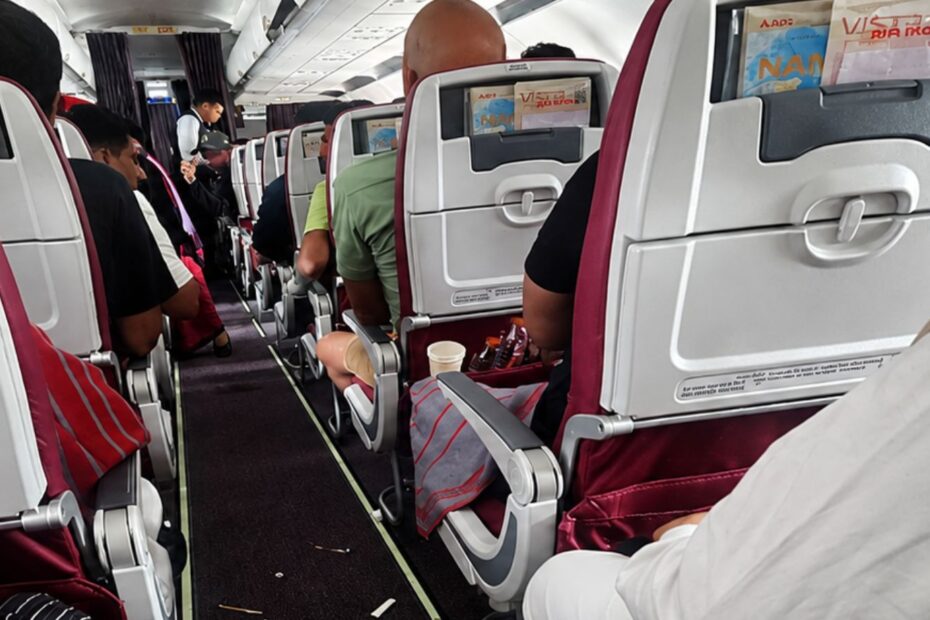
Air India said there were no serious injuries after flight AI2379 from Phuket to Delhi experienced turbulence. (ANI Photo/ Image enhanced using AI)
The Air India A320 aircraft that suddenly dropped 300 feet while flying from Phuket to Delhi on August 4 experienced a temporary loss of hydraulic systems, which led to loss of key control surfaces for about four seconds, an initial assessment of the digital flight data recorder (DFDR) data by aircraft manufacturer Airbus is learnt to have said.
While the government and Air India had initially attributed the incident to severe turbulence, a series of snags involving the aircraft’s hydraulic systems and flight control surfaces have emerged as a key focus area for investigators. Notably, the pilot-in-command of the aircraft also tested positive for marijuana, but given the initial assessment by Airbus, it now appears unlikely that his positive drug test was directly related to the serious incident involving the aircraft.
The incident, which led to 24 people on board sustaining injuries, is under investigation by the Aircraft Accident Investigation Bureau (AAIB), with Airbus and the French aircraft accident investigation body BEA assisting in the probe. In its initial analysis, which was sought by Air India, Airbus didn’t identify the underlying cause of the failure of hydraulic systems and asked the airline to conduct a series of maintenance tests and inspections — including checks of hydraulic pressure switches, pressure transducers, wiring, and the aircraft’s flight-control and automatic-flight systems, it is learnt. The manufacturer has also asked Air India to provide maintenance activities performed on the plane’s hydraulic system in the last month.
Also read | How pilots are tested for drugs, and the punishment that can follow
The Airbus A320 aircraft has three independent hydraulic systems — coded green, blue, and yellow — built as a redundancy so that the loss of one such system doesn’t result in total loss of hydraulic control. Hydraulic pressure is essential for moving several of the aircraft’s flight-control surfaces. According to experts, the simultaneous loss of the three hydraulic systems was virtually considered an impossibility on the A320, one of the most flown aircraft types globally.
As per an August 10 communication to Air India, Airbus is learnt to have said that, as per the DFDR data, the aircraft’s three independent hydraulic systems were lost in quick succession, resulting in the loss of control over elevators and ailerons for around four seconds. During this period, the aircraft’s nose pitched upwards, and the autopilot disengaged. The first officer —who was the pilot flying the aircraft— commanded for the nose to be pushed down, but the flight control surfaces were non-responsive due to loss of hydraulic control, it is learnt. Then the hydraulic systems recovered within seconds, and the sudden lowering of the nose to bring the aircraft under control likely threw passengers and cabin crew upwards, resulting in injuries to some of them.
Elevators, which are located on the horizontal section of the plane’s tail, control the aircraft’s pitch, which determines whether the nose moves up or down. The ailerons, located on the wings, control roll to determine whether the aircraft banks to the left or right. Put simply, in this case, the aircraft’s ability to command and control its attitude was temporarily disrupted because the hydraulic systems that power the flight controls were lost.
A key question in the investigation will be whether the hydraulic systems actually failed, or was it a case of spurious signals? The flight-control computers receive pressure information from three sources — two pressure switches and one pressure transmitter — and compare those inputs to determine the hydraulic status. As per Airbus’s initial assessment from the DFDR data, two pressure switches detected low hydraulic pressure, resulting in the flight control system removing hydraulic actuators from service. But the assessment doesn’t say whether the hydraulic pressure was indeed lost first, or whether it was due to an issue with faults in sensors or other components. Airbus is learnt to have asked Air India for more detailed reports from the pilots clarifying what was observed during the incident.
Story continues below this ad
“Nevertheless, please be reminded that this event requires a detailed analysis considering both aircraft systems and structural integrity, as the airframe may have been affected by the sudden movement. We will continue with the event assessment; please note that additional inspections may be required depending on the outcomes. Due to the complexity of this assessment, the final resolution may take longer than a standard AOG (aircraft on ground) case,” Airbus wrote in its initial assessment that was sent to Air India, it is learnt.