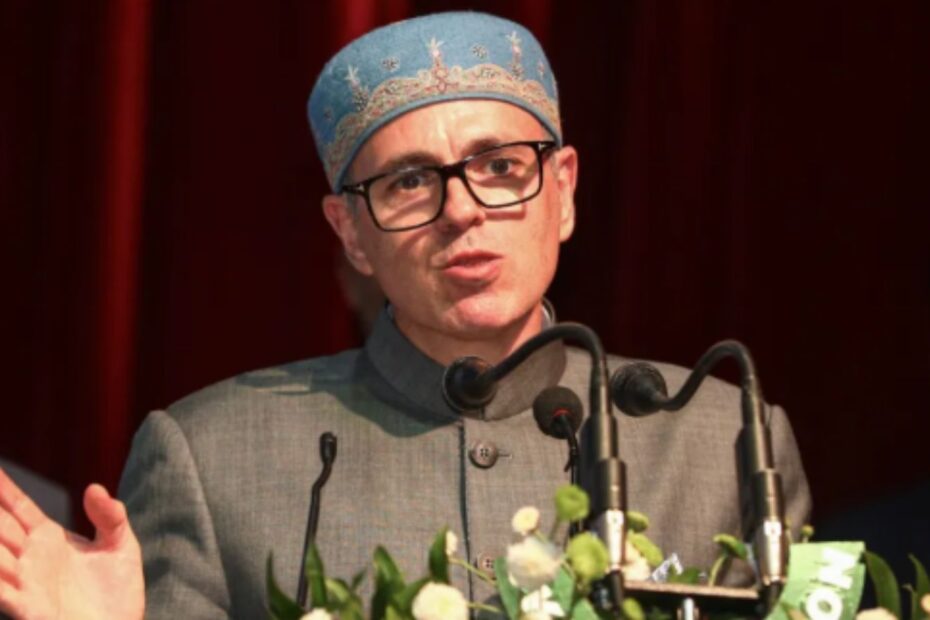
Sharma told Abdullah that the officer’s “continued defiance of and disrespect towards the authority of this Ministry has reached a point where the orderly administration of the Transport Department is being seriously compromised”. (File photo)
Jammu & Kashmir Transport Minister Satish Sharma has urged Chief Minister Omar Abdullah to have Transport Commissioner Vishesh Pal Mahajan replaced — a development that highlights the growing friction between the state’s elected government and the bureaucracy.
In a letter dated August 6, Sharma told Abdullah that the officer’s “continued defiance of and disrespect towards the authority of this Ministry has reached a point where the orderly administration of the Transport Department is being seriously compromised”.
Although elected MLAs and even ministers have frequently complained that bureaucrats ignore them, it is the first time that a cabinet minister has written to the chief minister about his concerns over the bureaucracy in a ministry he heads.
For his part, Mahajan denied any knowledge of the letter. Minister Sharma did not respond to calls and texts seeking a response. But sources claim Sharma was upset at a recent bureaucratic reshuffle of the transport department. The letter has also surprised many – Mahajan is frequently seen as an officer who does his job effectively without “illegal” requests or outside pressure.
In his letter, Sharma seeks the chief minister’s “urgent personal attention (to) a matter of serious concern relating to the conduct of Vishesh Pal Mahajan”, a Jammu and Kashmir Administrative Services (JKAS) officer.
“I had, in the first instance, attempted to address this matter informally and through internal channels. However, despite these efforts, there has been no improvement in the Commissioner’s conduct, and the pattern of disregard for the Ministry’s directions has, if anything, continued,” the minister complained.
Under our system of governance, the transport commissioner functions as the principal executive officer of the Department under the policy direction and overall supervision of the minister-in-charge, who, in turn, remains answerable to the House and to the public, he said.
Story continues below this ad
ALSO READ | Restoring J&K’s statehood is key to political stability
“Persistent insubordination by a senior officer not only undermines the authority and dignity of the elected office but also disrupts the chain of administrative accountability, adversely affects the morale of the Department and ultimately impedes the delivery of public services to the citizens,” he said, requesting the chief minister to “immediately move out” Mahajan and post in his place a suitable officer of appropriate seniority so that “the normal functioning of the department can be restored without further disruption”.
In the Union Territory of Jammu and Kashmir, governance is shared between the appointed Lieutenant Governor (LG) and the elected political government. While the LG holds overriding executive control over security, police, public order, and the senior bureaucracy, the elected chief minister and Legislative Assembly handle general legislation and local development.
As per the Business Conduct Rules, the LG has the final say on the functioning of the All India Services, the UT’s Anti-Corruption Bureau, the Directorate of Public Prosecutions, Prisons, and the Jammu and Kashmir Forensic Science Laboratory, besides having the final approval over the appointment of the Advocate General and other law officers.
In the past too, the elected National Conference government has been critical of the current administrative structure, using it to help push for the much-promised statehood. This July, National Conference leaders held a protest in Delhi to push for the statehood demand.