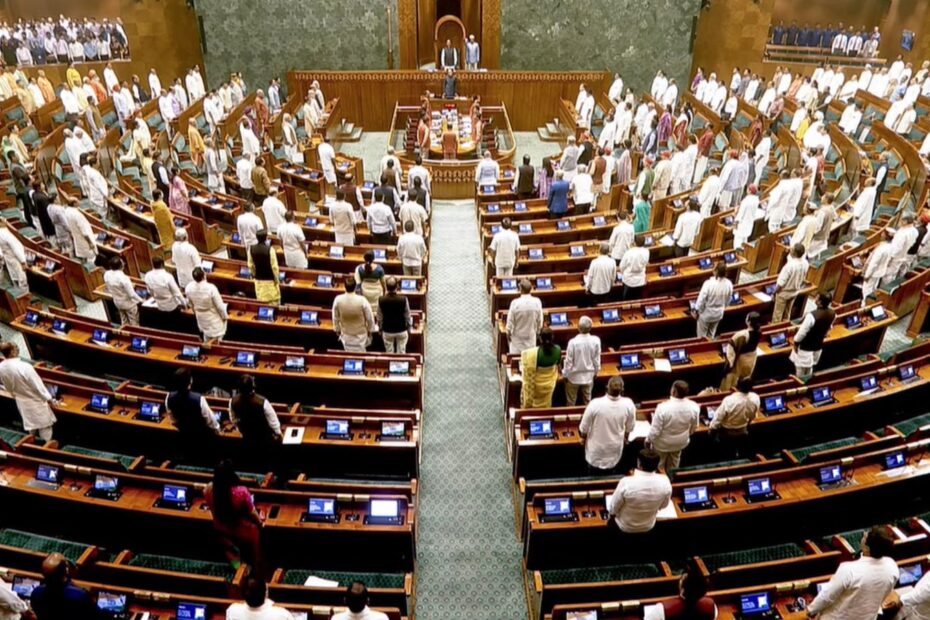
Parliamentary Affairs Minister Kiren Rijiju on Thursday said the productivity in Lok Sabha was 19%, while that of Rajya Sabha was 39%. The data was presented after the Monsoon Session of Parliament ended on Thursday.
However, this is not unprecedented. Data on every Parliament session, available since 2009, show there have been sessions where one or both Houses have occasionally seen even bigger washouts.
Advertisement
UPA years
The 2010 Winter Session, when the Congress-led UPA was in power for its second term and the BJP was the principal Opposition, was a complete washout. The Lok Sabha functioned for only 5% of its scheduled time in the session and the Rajya Sabha just 2%, according to data shared by PRS Legislative Research.
This session was a complete washout because of the deadlock between the government and Opposition over allegations of corruption in the 2G spectrum allocation. The Opposition demanded a probe by a Joint Parliamentary Committee (JPC), while the government said the Public Accounts Committee could do the same.
Also Read | Kerala to Keralam: As Lok Sabha clears Bill, why the state sought the change
Parliamentary functioning again nosedived in the 2013 Winter Session, ahead of the 2014 Lok Sabha polls. A resurgent BJP with Narendra Modi as its Prime Ministerial candidate sought to put the government on the mat over the draft JPC findings on telecom licence allocations.
Advertisement
Led by then Lok Sabha MP P C Chacko, the JPC had given a clean chit to then PM Manmohan Singh and then Union Finance Minister P Chidambaram, instead blaming former Communications and Information Technology Minister A Raja for misrepresentation of facts. The Opposition dubbed it a “cover-up”.
The session was further mired by protests – by MPs from Andhra Pradesh over the creation of Telangana, and over the plight of displaced people after the Muzaffarnagar riots in Uttar Pradesh. The session saw the Lok Sabha function for only 6% of its scheduled time and the Rajya Sabha 19%.
The following Interim Budget Session in 2014, just before Lok Sabha polls, was also a near washout as protests against the UPA government intensified ahead of campaigning for the election. The Lok Sabha functioned for 21% of its scheduled time and the Rajya Sabha 27%.
NDA years
After the Narendra Modi government came to power, the 2015 Monsoon Session fared poorly. The Lok Sabha functioned for 46% of its scheduled time and the Rajya Sabha just 9%. The Opposition had disrupted Parliament over the Lalit Modi controversy, demanding the sacking of then Union Minister of External Affairs Sushma Swaraj for allegedly using influence to secure British travel documents for Modi, and the Vyapam scam involving alleged irregularities in admissions and recruitment in BJP-ruled Madhya Pradesh.
The Lok Sabha subsequently saw the suspension of 25 of the 44 Congress MPs for five days, leading to a boycott of proceedings by several Opposition parties in solidarity with the suspended MPs. The Rajya Sabha could not conduct Question Hour throughout the session, though the Lok Sabha held Question Hour for a few days and also conducted some legislative business in the absence of Opposition parties.
The 2016 Winter Session was also a virtual washout, amid Opposition protests over demonetisation, with the Lok Sabha functioning for just 15% of its scheduled time and the Rajya Sabha 18%.
Also Read | Lok Sabha clears NCDC Bill and Kerala name alteration Bill by voice vote
The 2018 Budget Session also saw major disruptions, with the Lok Sabha and Rajya Sabha, functioning for just 21% and 27% of their scheduled time, respectively. The issues that washed out the session and left many Bills pending included Cauvery river water sharing between Karnataka, Tamil Nadu, Kerala and Puducherry, Andhra Pradesh’s demand for recognition as a special category state, and Opposition protests over an alleged fraud at the Punjab National Bank, among others.
The 2021 Monsoon Session saw the Lok Sabha and Rajya Sabha, respectively, functioning for just 21% and 29% of their scheduled time with the Pegasus snooping allegations and the three farm laws leading to disruptions.
The 2023 Budget Session saw the Lower House function for 33% of its scheduled time and the Upper House 24%. The standoff this time was due to the Opposition demand for a parliamentary committee to probe the Adani Group over allegations of stock manipulation and accounting fraud, Rahul Gandhi’s statement abroad that Indian democracy was “under attack”, and the disqualification of Gandhi from Parliament following his conviction by a Surat court on a defamation charge.
Present washout
After the Lok Sabha was disrupted again on Wednesday, the prospect of a discussion on the police action against students in the July 20 protests over paper leaks considerably thinned.
The Opposition demanded a statement from Union Home Minister Amit Shah on who ordered the police action. The government finally agreed, saying a discussion on the issue should begin and Shah would reply to it on Wednesday itself. But, with protests continuing, the Lok Sabha was adjourned.
The protests and disruptions prevented any significant legislative business in Parliament, with some Bills passed by voice votes without debates.