Already battling an existential crisis in Punjab — and facing allegations over drugs and sacrilege during its previous tenures — the Shiromani Akali Dal (SAD) is now facing another ghost from its past.
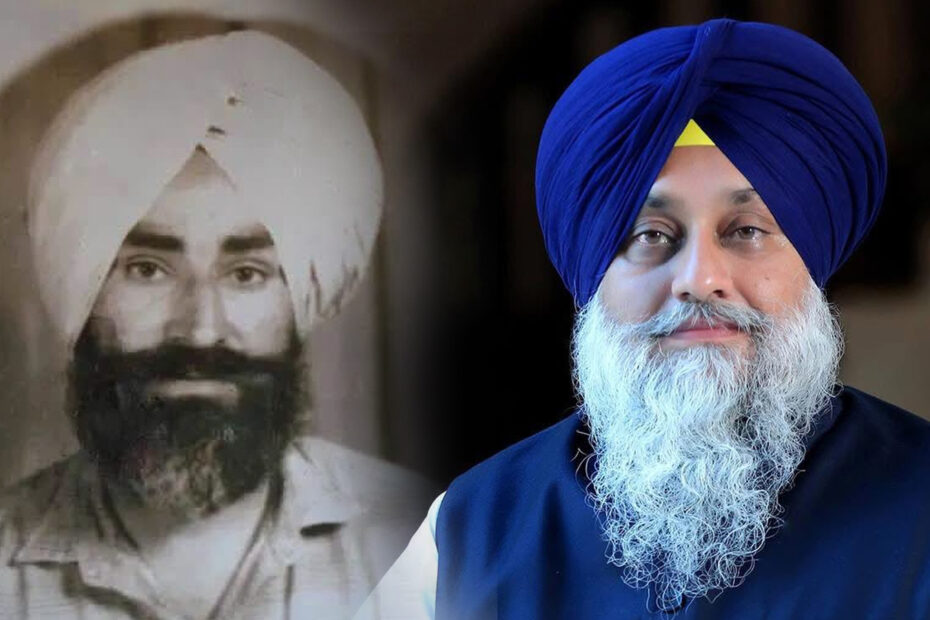
Months ahead of the Punjab Assembly elections, the party led by the Badals finds itself answering uncomfortable questions about “abandoning” Jaswant Singh Khalra, the former general secretary of the party’s human rights wing, whose 1995 murder has received attention lately following the controversy over movie Satluj. Khalra documented alleged extrajudicial killings by the Punjab Police and illegal cremations of “lawaris (unclaimed)” bodies. He was abducted on September 6, 1995, and later murdered in police custody, for which five policemen were convicted. The government’s decision to pull Satluj from the Zee5 OTT platform, because of “national security concerns”, has brought the focus back on Khalra and his death.
Advertisement
Though the Congress was in power from 1992 to 1995, both at the Centre and in Punjab, the Akali Dal has been forced to provide explanations. Also, for the first time in three decades, the Akali Dal has evoked Khalra’s “sacrifice” in public speeches, acknowledging him as their “own”. The SAD — through the Shiromani Gurdwara Parbandhak Committee (SGPC) that it controls — is also organising screenings of the film across Punjab villages while simultaneously defending its own record.
The Akali Dal is facing questions about why the judicial commission promised in its 1996-97 election manifesto to investigate disappearances, fake encounters, and police excesses never constituted after it formed the government along with the BJP. Following the release of the movie, demands for a Truth and Reconciliation Commission have resurfaced. Such a commission, its advocates say, will establish an official account of the violence and police excesses that marked insurgency. It is also being asked why the SAD fielded former SGPC chief Jagir Kaur against Khalra’s wife Paramjit Kaur Khalra from Khadoor Sahib in the 2019 Lok Sabha elections.
Following Khalra’s abduction, Akali veteran and then SGPC president Gurcharan Singh Tohra sent a telegram to Justice Kuldip Singh, prompting the Supreme Court’s intervention in the matter. Yet Paramjit Kaur Khalra has remained sharply critical of the Badal leadership. In several interviews over the years, she has recalled approaching Chief Minister Parkash Singh Badal after the SAD returned to power in 1997. According to her, Badal told her: “Forget the past now, forget Khalra … now focus on educating your children. Please tell us if you want to be a minister or any other post.”
Advertisement
Her political choices also reflected that distance. She contested the 1999 Lok Sabha election from Tarn Taran for Tohra’s faction, Sarb Hind Shiromani Akali Dal, and the 2019 election on a Punjabi Ekta Party ticket. She lost both.
A changing Panthic landscape
The Khalra debate comes at a politically sensitive time for the Akali Dal. Since losing power in 2017 and suffering another crushing defeat in 2022, it has steadily shrunk and its hold on Panthic politics has weakened. The emergence of radical and splinter organisations — one such outfit is Akali Dal Waris Punjab De — has begun occupying the space the SAD once monopolised.
The SAD has always acted as a force that absorbs the radical strain in state politics while remaining committed to “secular, federal and democratic India”, with Hindu-Sikh unity at its core. Though the controversial memorial commemorating the “martyrs” and devotees who died during the Indian Army’s Operation Bluestar came up during SAD-BJP rule in 2013 and the SGPC also honours the families of Indira Gandhi’s assassins, the party strictly opposes the demand for a separate Sikh state of Khalistan.
Responding to what he described as a “misinformation campaign”, SAD president Sukhbir Singh Badal sought to reclaim Khalra’s legacy. “The SAD and the SGPC had ensured the conviction of Khalra’s killers, helped sole eyewitness Kuldeep Singh Bachra to safely record his statement, and provided legal and financial support to Bachra’s family. We never abandoned them”, he said, adding, “It was also the SGPC telegram that led to the matter reaching the Supreme Court. In contrast, the Congress and AAP governments tried to shield the murderers and supported their release in courts.”
Khalra’s ideology
The controversy has also revived questions about Khalra’s ideological position. In some of his writings published in 1991-92 when he was in the UK, Khalra expressed sympathy for the Khalistan movement and “Sikh martyrs”. However, after returning to the country, he focused almost entirely on documenting enforced disappearances and pursuing justice through the courts.
In 1993, Khalra originally joined the Akali Dal (Mann) faction led by Simranjit Singh Mann, which actively supports Khalistan. He then served as the election in-charge for Justice Ajit Bains, a human rights crusader, who contested the Jalandhar Lok Sabha by-election in 1993 for the Mann group, but lost. Khalra then moved to the Parkash Singh Badal-led SAD in 1994. Mann’s faction was registered as a separate party, SAD (Amritsar), the same year.
In his final recorded speech in Canada in 1995, Khalra spoke of approaching the High Court and Supreme Court to seek accountability for the unidentified bodies.
Author Ajmer Singh, who wrote Shaheed Jaswant Singh Khalra: Soch, Sangharsh Te Shahadat, said the distinction was important.
“Khalra was initially a Leftist and later he also briefly joined the International Democratic Party (IDP), whose slogan was ‘Khaadkuan naal gall karo, Punjab da masla hall karo (Speak to militants, solve Punjab’s issues)’. In 1991, he went to England to live with his brother due to increased threats from police, but returned the next year. In England, he wrote for several publications, including Liberation Khalistan. Post Operation Bluestar and the 1984 anti-Sikh riots, Khalra strongly sympathised with the Khalistan struggle through his writings. That was common then because Sikh sentiments were deeply hurt. He never advocated senseless violence either by militants or the police. He even sat on a hunger strike when militants killed Hindus. Later, he completely devoted himself to seeking answers through the courts. Being a devout, resistant Sikh, he was naturally inclined towards Akali Dal, a party born out of struggles.”
Punjab Police itself informed the Supreme Court that Khalra was neither wanted nor booked in any criminal case.
The mistake Akalis made
Several senior Akali leaders said not establishing the judicial commission was a mistake.
“It was one of our core promises, but Badal saab turned away after coming to power. Whenever anyone raised the issue, he would say, ‘Forget whatever happened.’ Sikh sentiments remained deeply hurt after 1984, but the Badals never really applied that healing balm. Now they are trying to portray Khalra as their own. For 31 years, they abandoned both him and his cause,” said veteran leader Gurpartap Singh Wadala, general secretary of the Akali splinter group SAD (Punar Surjit).
Prof Prem Singh Chandumajra, another veteran Akali leader now with SAD (Punar Surjit), echoed that assessment. “What proved disastrous was the failure to constitute the judicial commission. Looking at Khalra’s sacrifice, the party also should not have fielded Jagir Kaur against Paramjit Kaur Khalra.”
Senior SAD leader Balwinder Singh Bhundar said the witnesses deposed before the CBI only after his party came to power in 1997. “Nobody listened to the Khalra family when the Congress was in power. The Congress and the AAP later supported the release of the accused,” he said.
Harcharan Singh Bains who served as adviser to Parkash Singh Badal said the party always stood with Khalra. “We never disowned Khalra. Bibi Paramjit was offered a ticket, but she said she was not interested in public life. Key witness Kuldeep Singh Bachra’s family received support from the SGPC. Khalra’s brother Amarjit Khalra became an SGPC member. We have always taken pride that Khalra was ours. We respect his family and are taking Satluj to the masses.”
Asked about Khalra’s pro-Khalistan writings, Bains said, “Everything has to be seen in perspective. The Sikh community underwent immense trauma after the attack on Akal Takht Sahib and the massacre of Sikhs in Delhi. The reaction was extraordinary but temporary. The SAD remains committed to federal and democratic India.”
Political scientist Prof Ashutosh Kumar of Chandigarh’s Panjab University said the Akali Dal deserves credit for maintaining Hindu-Sikh harmony after the insurgency and helping restore peace in Punjab. “Radical groups may try to politically exploit Satluj before elections, while the SAD is attempting to protect its traditional support base by taking the film to the people. The focus should ultimately be on healing wounds rather than reopening them,” he said.
Khalra’s daughter Navkiran remains unconvinced by the political debate. “For us, the SAD, the BJP, the Congress, or the AAP are all the same. We stopped expecting anything from political parties long ago,” she said.