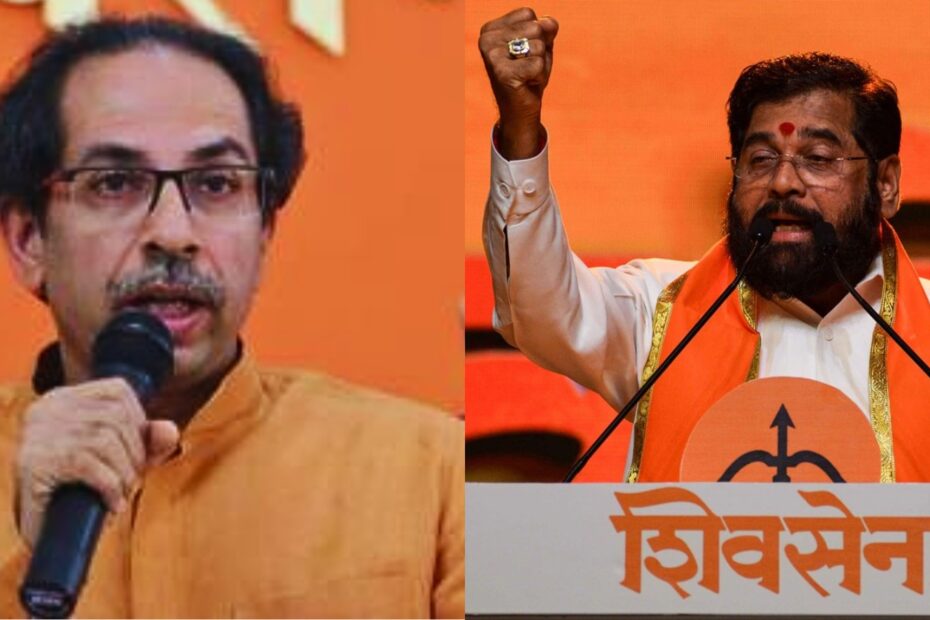
By increasing the Shiv Sena’s strength in the Lok Sabha from seven to 13 MPs and reducing Sena (UBT)’s tally to three, the approval has strengthened Shinde’s position within the BJP-led NDA. This comes after the 2024 Maharashtra Assembly election established the BJP as the dominant partner in the ruling Mahayuti alliance in the state.
Advertisement
The revised party positions in the Lok Sabha follow the defection of Sena (UBT) MPs Sanjay Jadhav, Sanjay Patil, Sanjay Deshmukh, Omraje Nimbalkar, Nagesh Patil Ashtikar and Bhausaheb Wakchaure, to the Shiv Sena on June 22 under what the Shinde-led party dubbed “Operation Tiger”. With these inductions, the Shiv Sena has become the NDA’s third-largest constituent in the Lok Sabha with 13 MPs, behind the BJP’s 240 and the Telugu Desam Party’s 16.
The Shiv Sena’s tally of 13 Lok Sabha MPs makes it the joint largest party in Maharashtra along with the Congress. The BJP has nine MPs.
Read | Anti-defection law needs a fundamental rethink
For the Shinde camp, the recognition marks the culmination of “Operation Tiger” and appears to restore some of the leverage it lost after the Assembly elections, when the BJP’s sweeping victory reduced Shinde from Chief Minister to Deputy Chief Minister and cemented the BJP as the dominant force within the Mahayuti.
Advertisement
Shiv Sena leaders say the exercise was aimed not merely at increasing the party’s strength in Parliament but also at enhancing its bargaining position within the NDA.
They also point to another factor — the “rebel TMC” faction. Sena leaders fear their standing within the NDA could diminish further as the 20 “rebel TMC” MPs, who have merged with the Nationalist Citizens Party of India (NCPI) but are still awaiting recognition from Birla, have announced their support for the ruling alliance in Parliament. “Increasing our strength from seven to 13 secures our position in the NDA,” party sources said.
The Shiv Sena’s increased tally also reinforces the institutional recognition that Shinde has acquired since revolting against the undivided Shiv Sena in June 2022. Since the split, Shinde headed the Maharashtra government for nearly two years from 2022 to 2024, secured the Election Commission’s recognition as the leader of the “real Shiv Sena”, retained the party’s “bow and arrow” symbol, and outperformed Sena (UBT) in the 2024 Assembly elections, with the Shiv Sena winning 57 seats compared with Sena (UBT)’s 20.
What Sena may demand
The Shiv Sena is now expected to press for greater representation whenever the Union Cabinet is expanded. Party leaders are likely to seek two ministerial berths, with Kalyan MP Shrikant Shinde emerging as one of the leading contenders.
However, the party’s increased strength has also created a problem of plenty. Sources said at least one senior MP who recently joined the Shinde camp is expected to stake a claim to a Cabinet berth.
Sena leaders also argue that the party’s larger parliamentary strength may translate into greater representation on parliamentary committees and a bigger role in NDA coordination.
The BJP’s fresh calculations
With the BJP keen to push major legislation and possible Constitutional amendments, including delimitation, party sources said the Shiv Sena’s increased strength would be “useful in the context of future legislative priorities”.
However, it has also prompted fresh calculations within the BJP, with leaders acknowledging the party is keen to ensure that no single ally acquires disproportionate influence within the NDA.
To keep the Shiv Sena “in check”, the BJP has also kept communication channels open with leaders from the NCP (SP).
Even if the Sunetra Pawar-led NCP, which has one Lok Sabha MP, and the NCP (SP), which has eight MPs, were to come together, their combined strength would still be nine — below the Shiv Sena’s 13. However, such a move would provide the BJP with another sizeable ally in Parliament and broaden its options within the coalition.
It is in this context that recent meetings between NCP (SP) state president Jayant Patil and Fadnavis, followed by Shinde, have attracted attention. Patil has maintained that the meetings were related to constituency work and local issues. Political circles, however, continue to speculate about his future, though none of the parties has confirmed any such move.
The BJP and the Shiv Sena have had an uneasy relationship since the 2024 Maharashtra Assembly elections. While both Shinde and Devendra Fadnavis have maintained that the Mahayuti remains united, leaders in both parties privately acknowledge differences over power-sharing, appointments and decision-making.
Challenges ahead
While the merger issue appears to have been settled in Parliament, the two Shiv Sena factions now face the prospect of a legal battle. Sena (UBT) continues to challenge both the defections and the Speaker’s recognition of the merger. Party leaders argue that legislators alone cannot merge a political party unless the original organisation itself merges, and contend that the legal requirements under the anti-defection law have not been met.
Reacting to the Speaker’s decision, Sena (UBT) leader Aaditya Thackeray said: “What else were you expecting? This is the injustice we have already been facing.”