A lot of water has flown under the bridge in the 25 years since the landmark Agra Summit ended without a breakthrough between India and Pakistan, with the Kashmir dispute the main stumbling block. While Jammu and Kashmir’s political landscape stands transformed after the abrogation of its special status in 2019, hostility between India and Pakistan has made the possibility of a dialogue virtually unthinkable.
However, difficult as it is, leaders in Kashmir say, there is no other way.
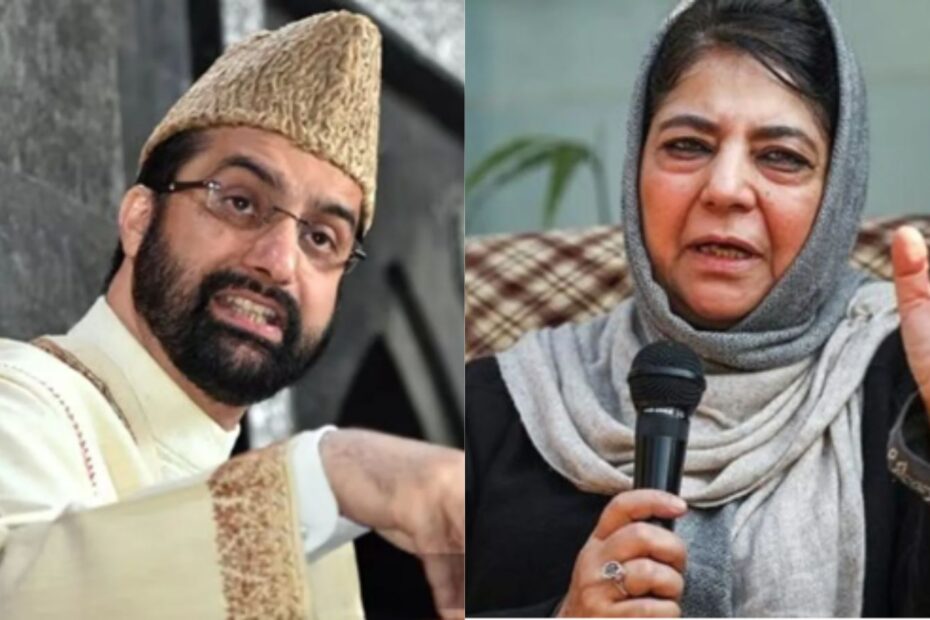
Hurriyat chairman Mirwaiz Umar Farooq was among those who met Pakistan President Pervez Musharraf when he came for the Agra Summit in July 2001. The meeting, held in Delhi before Musharraf proceeded to Agra, did not go down well with Delhi, and was one of the factors that muddied the waters.
While Mirwaiz says he has forgotten the exact details of the meeting, he remembers the row it stirred up. “It was literally a storm in a tea cup. The way it was turned into a huge controversy, we felt that the Hurriyat and its point of view was being misunderstood. We decided to travel to different parts of India to clear this misunderstanding. I personally went to Kolkata and met Jyoti Basu (the CPI-M veteran who had stepped down as West Bengal Chief Minister by then), I went to Hyderabad as well.”
Mirwaiz says the controversy also forced them to coin a new term – “triangular talks” instead of “trilateral” or “tripartite” talks.
“We were only saying that you include Kashmiris in the process,” he says. “We were not averse to India and Pakistan talking to each other as a first step… We didn’t say that we should be in the same room when India and Pakistan are talking. (But) The whole idea was that the Kashmiri voice should be a part of the process. We had seen Shimla, Tashkent (agreements), they didn’t work because the Kashmiri voice was not a part.”
There was no choice but to return to the table and talk, the Hurriyat leader says.
Story continues below this ad
“What is the option with us other than picking up the threads from Agra? We can’t be in a perpetual state of war. Operation Sindoor or Bunyanul Marsoos (the Pakistani name for a 2025 offensive against India), we can’t have it all the time.”
Mirwaiz also points to how a breakthrough seemed possible at the Summit, before it got scuttled. The India-Pakistan engagement eventually led to serious Kashmir-centric confidence building measures and dialogue four years later over Musharraf’s four-point proposal to resolve the Kashmir dispute, apart from the bus service for families divided by the Line of Control between Srinagar and Muzaffarabad. Hurriyat leaders also took the bus to travel to Pakistan as part of the engagement process.
This was followed by the opening of the cross-LoC trade.
Both the bus service and the trade have remained shut since the Pulwama attack by the Jaish-e-Mohammad in February 2019, which killed 40 paramilitary personnel and brought India and Pakistan to the brink of a war.
Story continues below this ad
Speaking about Agra, Peoples Democratic Party (PDP) president and former CM Mehbooba Mufti says: “There was a lot of hope then… a breakthrough seemed around the corner. There was a rare convergence of political thinking at the state and central level, as well as in Pakistan. (Prime Minister) Vajpayee ji was at the centre, Mufti sahib (PDP founder Mufti Mohd Sayeed) in the state and Musharraf sahib in Pakistan. The leadership thought we have to do something.”
Veteran Communist leader M Y Tarigami, who travelled to Agra during the Summit on his own, says while he doesn’t want to sound pessimistic, there is little hope of engagement between the two countries in the near future.
ALSO READ | Two men in a room: 25 years of Agra Summit, and what lies ahead for India, Pakistan
Referring to the scrapping of special status and the “dismay” in Kashmir over it, he adds: “As of now, the gap between the two countries, the level of mistrust are immensely high. There is no significant attempt from either side to reduce or address these gaps, and to find a way forward.”
But, Mirwaiz says, no one would have imagined the Agra Summit would happen either. “At that time, India and Pakistan relations were much worse, there was continuous firing on the LoC, militancy was at its peak, crackdowns were regular.”
Story continues below this ad
Now, he adds, “the situation is much better”. “Even though the two countries are not talking, the ceasefire is holding on the LoC,” Mirwaiz says, while acknowledging that “sad” incidents such as the Pahalgam attack were significant setbacks for peace.
Mehbooba says she sees hope in the recent statements by RSS leaders. “Kashmir is not a priority anymore, neither here (in India) nor there (Pakistan),” she says. “But there have been some hints about talks from the RSS leadership, some rumours about Track II talks happening… I don’t know if they are just rumours or if there is something concrete… But (any talks) are nice… I think we can start from where Vajpayee ji left it.”