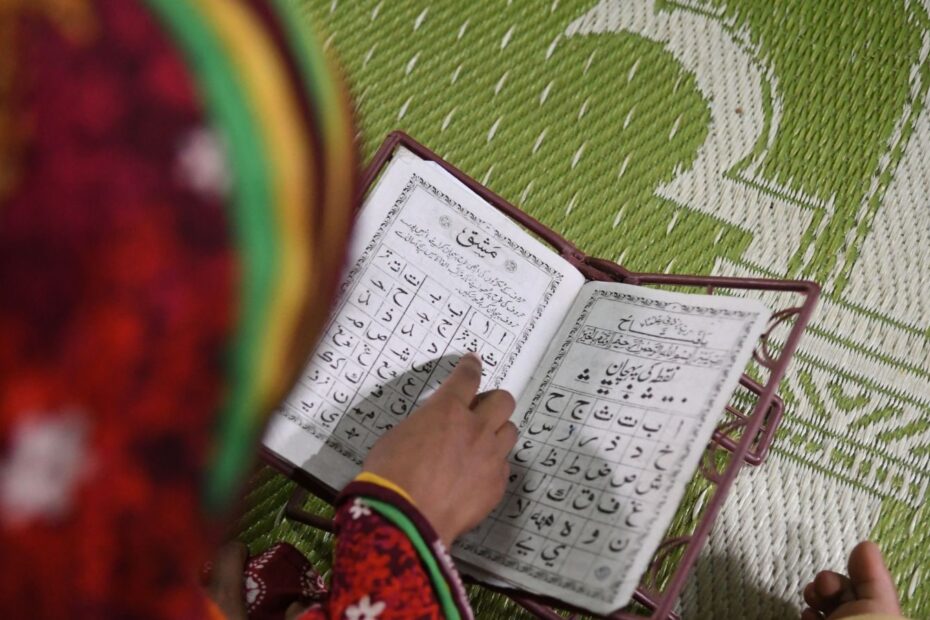
The West Bengal government has made it mandatory for madrasa students to sing Vande Mataram during morning Assembly prayers. The order dated May 19 came into force with immediate effect and was issued a week after the government made the singing of six stanzas of the national song mandatory in all schools under the Department of Education.
“I am directed to order that in supersession of all previous orders and practices, singing of Vande Mataram during assembly prayers, prior to the commencement of classes, is hereby made mandatory in all Madrasahs [Govt. Model Madrasahs (English Medium)/Recognized Govt. Aided Madrasahs /Approved MSKs / Approved SSKs / Recognized Unaided Madrasahs) under the Minority Affairs and Madrasah Education Department, across the State of West Bengal, with immediate effect,” reads the order (MSKs are Madhyamik Shiksha Kendras, or Secondary Education centres, while SSKs are Shishu Shiksha Kendras or community-managed primary educational institutions).
Advertisement
The debate around the national song got reignited earlier this year after the BJP-led Central government in February issued a directive mandating the full six-stanza recital of Vande Mataram at official functions to commemorate the song’s 150th anniversary. The widespread use of the song — Vande Mataram means “Mother, I bow to you” — began only after it captured popular imagination during the movement against Lord Curzon’s Partition of Bengal in 1905. Even as the song gained rapid popularity because it represented the zeal to free the country, sections of the Muslim society objected to it, saying it invokes a Hindu goddess and thus was idolatrous and against Islam. The Congress Working Committee (CWC) in 1937 adopted a resolution on singing only the first two stanzas.
Recent orders
The order comes in the wake of the new BJP government’s recent steps that have brought about a sense of disquiet in the state’s minority community. On May 13, the government announced a strict imposition of the state’s Animal Slaughter Control Act, 1950, spreading confusion in cattle markets ahead of Bakr-i-Eid. The new norms mean only an animal aged 14 years and above can be slaughtered legally, and that the animal must have a joint certificate issued by the head of a municipality or panchayat samiti and a government veterinary surgeon declaring it “fit for slaughter”. The order has affected both Hindu and Muslim cattle traders.
On May 18, the Suvendu Adhikari-led Cabinet decided to discontinue from June 1 all the assistance schemes based on religious classification that are run by the Information and Culture Department and the Minority Affairs and Madrasa Education Department. Sources said schemes providing allowances to imams, muezzins, and purohits, which the Mamata Banerjee government had introduced, and scholarships for minority students would be among those affected.
Advertisement
At the same meeting, the Cabinet decided to cancel the existing OBC reservation list with immediate effect, revising reservation percentages for the backward classes in jobs and government posts and abolishing sub-categories. With this, the government reversed the Trinamool Congress (TMC) government’s move to include several Muslim communities in the list, which the BJP had labelled “Muslim appeasement”.
Opposition vs BJP
While the Opposition criticised the order, the BJP denied there was any controversy. “It is not an issue of Hindus and Muslims. Such divisive politics had destroyed the country. It led to the division of the country. In 1937, had the Congress not divided Vande Mataram, then the country would not have been divided. Netaji Subhas Chandra Bose did not support it. During protests against the Nizam of Hyderabad, students and Congress youth leaders chanted Vande Mataram,” said state BJP president Samik Bhattacharya.
TMC spokesperson Pradeepta Mukherjee said such an order should not be imposed in a multicultural country like India. “Vande Mataram is respected, but forcing it on minority Institutions is improper,” he said.
Former TMC Rajya Sabha MP and the ex-chairperson of the West Bengal Minority Commission, Ahmed Hassan Imran, told The Indian Express, “Muslims have objected long back to singing the song. There are portions which Muslims cannot sing. Our appeal to the state government will be to let Muslim students stand during the morning prayer, but exempt them from singing the song.”
State Congress spokesperson Soumya Aich Roy accused the BJP of “destroying” cultural diversity and unity. “Bengal was untouched because it was out of reach. Now, they have started it when in power. Forcefully implementing their politics is a characteristic of the BJP,” he said.
CPI(M) state secretary and Politburo member Md Salim told Express, “Love for the country cannot be enforced through a circular or government order. Everybody can pray in his or her own way. There is the national anthem, and then there are so many nationalistic songs from Bengal. Anyone can sing anything. But when the government makes it mandatory, the move may be counterproductive. It is a question of the rights of people, the right to choose which song to sing and what to wear.”
The imam of Kolkata’s Nakhoda Masjid, Maulana Muhammed Shafiq Qasmi, described the government’s move as “confrontational”.
“India is a secular country. Everyone has the right to worship freely. However, a song of a particular religion should not be imposed on others. Making it mandatory goes against the secular fabric of the country. This is a confrontational and forceful move. If it had been a fact that the country would have benefitted somehow with the move, then people would have considered,” he told Express.
However, RSS joint publicity in-charge for the eastern zone, Jishnu Basu, alleged the opposition to singing the song in its entirety was because of “self-interest”.
“In 1930, Kazi Nazrul Islam published Anandamoyeer Agomone (an anti-colonial poem that invoked Goddess Durga and compared her to the motherland, something for which Nazrul faced sedition charges) in Dhumketu (a bi-weekly nationalist magazine). If a luminary like Kazi Nazrul Islam revered Vande Mataram and had no objection, those who are opposing it now are just doing so because of self-interest,” Basu said.
At present, there are 609 recognised madrasas in Bengal, of which 102 are functioning under the Senior Madrasa education system, while the rest are under the High Madrasa education system. In March, the Supreme Court declined to entertain a petition challenging the Centre’s circular on singing the national song at official events, clarifying that the directive was “purely advisory” and carries no penal consequences for those who choose not to follow it. The court also drew a parallel with the landmark Bijoe Emmanuel case, where students were protected for standing respectfully during the national anthem without singing it.