Monterey Bay Aquarium has earned world renown for immersing the public in the ecology and mystery of the oceans, while driving conservation programs to ensure that future generations (wild and human alike) can enjoy a healthy sea.
Since opening in 1984, the aquarium has drawn an average of about 2 million visitors a year, transforming the historic waterfront immortalized by John Steinbeck and battered Cannery Row into one of the coast’s biggest tourist destinations.
For more than 40 years, aquarium Chief Executive Julie Packard drove the mission of education and conservation, cementing the aquarium’s acclaim, before announcing in early 2025 that she would step away from the top job while continuing to serve on the aquarium’s board. The 72-year-old Packard, an oceanographer, is the daughter of technology magnate David Packard, the aquarium’s founding benefactor.
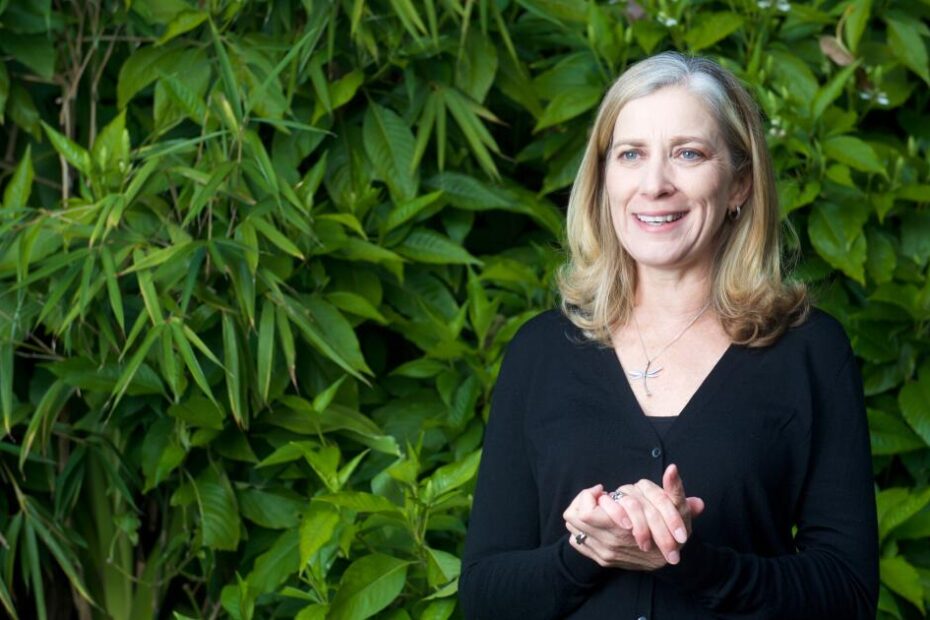
The aquarium opened a new era Tuesday with the announcement that Jenny Gray — a leader known for her work in animal ethics, welfare and conservation in Australia — will become just the second chief executive to lead the Monterey aquarium. She starts in May.
“I think the responsibility of taking on a much-loved institution with a single CEO for 40 years is daunting,” Gray said via Zoom from Melbourne, her first U.S. interview since the appointment. “I will make sure I get it right.”
Gray appears to have the resume to do just that. For the last 18 years, she led a group of four zoological facilities in southern Australia and previously served as president of the World Assn. of Zoos and Aquariums.
Born in the former Swaziland and raised in South Africa, Gray has had an unusual career that included stints in public utilities, airlines, banking and wildlife conservation. She recalls as one of her proudest achievements her work to merge separate bus lines for Black and white riders in Durban, South Africa, into a single line.
Gray received a master’s degree in transportation from UC Berkeley in 1989 before earning an MBA and finally a PhD in ethics, the latter from University of Melbourne, before moving to her position as head of Zoos Victoria in south Australia.
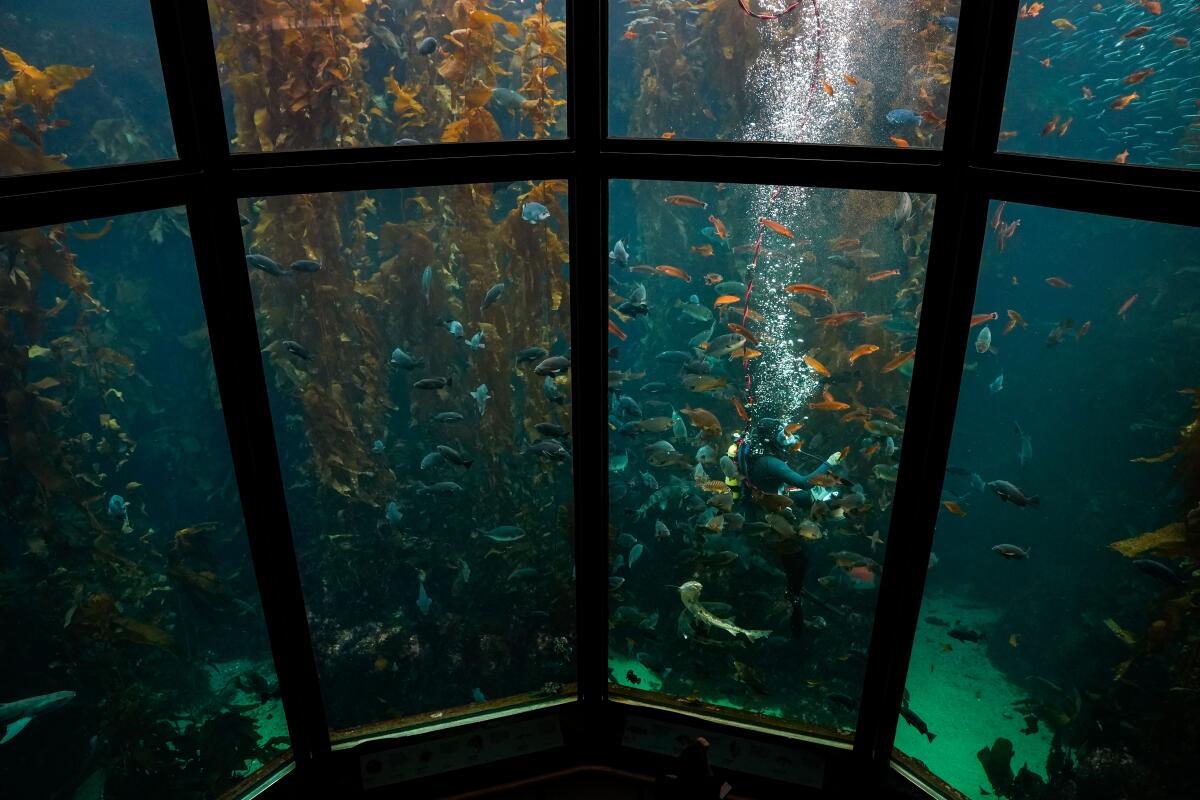
The Kelp Forest tank at the Monterey Bay Aquarium in 2020.
(Kent Nishimura/Los Angeles Times)
Under Gray’s direction, the annual visitor count at the four zoos nearly doubled, and annual memberships jumped about fivefold. In interviews, she spoke most passionately about the zoos’ role in protecting endangered species. She told a universty publication about the Melbourne zoo’s work protecting 27 indigenous species, including a small reptile called the grassland earless dragon. The zoo found the creature, thought to be extinct, in 2023 and began to rebuild its population.
An avid scuba diver, Gray said that when she starts work in late May at the aquarium, she will focus on plans for new exhibits, “experiences that delight” and “on the really profound education and conservation programs already running, and then looking at what we know and can share about the importance of the open oceans.”
She called for vigorous implementation of the international High Seas Treaty, a historic pact that took effect last month. It is designed to protect marine life in international waters from overfishing, plastic pollution, damaging shipping practices, potential deep-sea mining, along with the impacts of climate change.
Gray, 61, noted that her zoos helped lead a campaign in 2021 to ban balloon releases in Victoria state. After three years, a survey found a 63% reduction in balloons, string and the plastic clips that seal the balloons. That improvement felt meaningful, because of the high levels of plastic waste found in sea creatures and marine birds.
Gray recalls being “blown away” on her first visit to the Monterey aquarium on summer break during her graduate school years in Berkeley. After that 1989 introduction, she grew to appreciate how the facility replicated the rich ecosystem of Monterey Bay — including schools of anchovies and a “beautiful, swaying kelp forest.”
She contrasted that with aquariums that spotlight mostly big, charismatic creatures such as dolphins and whales. “We’re not going to go for the flashy,” Gray said. “We’re going to go for the really meaningful.”
Not that Gray doesn’t appreciate creatures with a little panache. In Australia, her favorite has been the wombat, the adorable, mostly nocturnal marsupial. But she’s well aware that there will be a new headliner in the lineup when she arrives in Monterey. “I think we’re talking about trading up,” Gray said with a smile, “wombats for sea otters.”

(Myung J. Chun/Los Angeles Times)
- The number of Canadian visitors to California plummeted more than 18% in 2025 compared with 2024.
- Canadians are declining to travel to the U.S. or shortening their stays because of Trump.
- The board of Warner Bros. Discovery reopened bidding, giving Paramount seven days to make its case.
- Warner’s board still maintains that it prefers Netflix’s competing proposal.
- Whatever the outcome, the sale promises to reshape Hollywood.

FBI released this image showing an armed individual appearing to have tampered with the camera at Nancy Guthrie’s front door the morning of her disappearance.
(FBI)
- The grainy black-and-white image has become the center of the investigation into Nancy Guthrie’s abduction.
- “I believe somebody out there can look at that video and go, I know exactly who that is,” Chris Nanos, the sheriff of Pima County, told the Daily Mail.

The Hollywood Bowl this summer will pay tribute to Gustavo Dudamel with its four-night extravaganza “Celebrating Gustavo at the Bowl.”
(Robert Gauthier/Los Angeles Times)
Email us at essentialcalifornia@latimes.com, and your response might appear in the newsletter this week.

(Gina Ferazzi/Los Angeles Times)
Today’s great photo is from L.A. Times staff photographer Gina Ferazzi of a giraffe at the Palm Springs Living Desert Zoo and Gardens.
Jim Rainey, staff reporter
Hugo Martín, assistant editor, fast break desk
Kevinisha Walker, multiplatform editor
Andrew Campa, weekend writer
Karim Doumar, head of newsletters
How can we make this newsletter more useful? Send comments to essentialcalifornia@latimes.com. Check our top stories, topics and the latest articles on latimes.com.