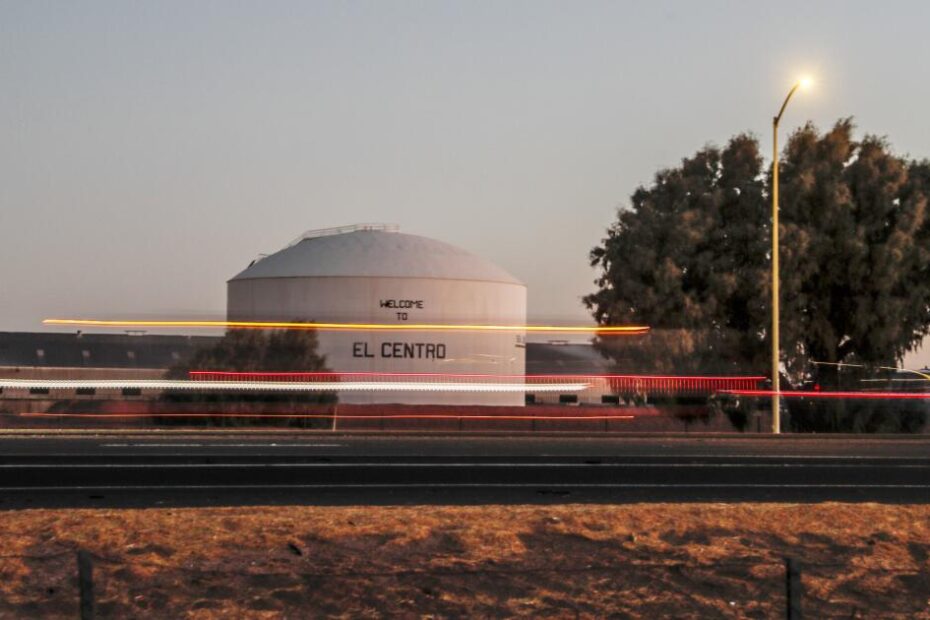
Giant computer data centers that power artificial intelligence and cloud computing are popping up around California, as are fights with communities that don’t want to live near them.
The contests promise to become increasingly common as local governments question whether the economic benefits of new development outweigh concerns about environmental impacts, including enormous water and energy use. The fights come amid a growing demand for cloud computing and AI services used for everything from chat bots to analytics, navigation, gaming and social media.
One of the latest battles emerged recently in Imperial County, where a court fight has erupted between the city of Imperial and a developer who wants to build a nearly 1 million-square-foot computer center on vacant land along the city’s border.
Imperial County officials have said they have the power to allow the project by Imperial Valley Computer Manufacturing to go ahead — without the city’s approval — because the 75 acres of vacant land where the computer center would go on unincorporated county land is already zoned for industrial use.
But the city of Imperial has gone to court to try to force a full environmental review under the California Environmental Quality Act (CEQA.) City officials say the project could harm homeowners who live immediately adjacent to the site.
Homeowners who bought property nearby might have known about the industrial zoning, but they had no idea specifically what that would mean, said City Manager Dennis Morita. “So now I think they are concerned about things like . . . noise, light, traffic, water use and all those things,” said Morita.
A review under the state’s environmental law, he said, “would provide a framework to make sure you capture all the potential impacts, have them analyzed, and if there are impacts, to determine what the mitigation measures should be.”
The county has joined the Huntington Beach-based development partnership in arguing that the property already permits a data center, which would be built along with cooling towers, a utility substation and gas-powered backup electric generators.
Sebastian Rucci, the Orange County lawyer and entrepreneur pushing the project, said it would bring jobs, tax revenue and other benefits to an economically depressed area. He said that the data center — to be used by a major tech company he can’t yet identify — would be the largest in California.
“California hasn’t done anything like this. It gets beat up because of CEQA,” Rucci said. “I think it would be great for the state to be able to say, ‘Look, we can do things too. The rest of the country is doing data centers, so can we.’ ”
Cornell University researchers released a study late last year that concluded that, by 2030, the current rate of AI growth would annually put 24 to 44 million metric tons of carbon dioxide into the atmosphere, the equivalent of adding 5 to 10 million cars to U.S. roads. That level of growth would also use up to 1,125 million cubic meters of water per year, roughly the amount used by 10 million Americans. But the study also found that those impacts could be reduced enormously — reducing carbon dioxide emissions by 73% and water usage 86% — with smarter siting and planning of the facilities.
Rucci contends that he has done just that kind of planning, including arranging for the use of reclaimed water to cool the computer center, but doesn’t want to be chained to California’s environmental laws. “That’s just going to give somebody a chance to sue you and spend two years arguing on what the [public] record [says], which is crazy.”
Morita said CEQA provides a framework for recording and enforcing a developer’s promises. He said that, rather than operate with an “inferiority complex,” as it has in the past, the county should seek assurances that any new development brings benefits and as few drawbacks as possible.
On Feb. 10, the two sides will be in court. Rucci’s partnership has asked a judge to dismiss the city’s bid to force more environmental review.

Within Southern California, the rent decline is unique to L.A. Rents rose or remained steady in Orange, Ventura and San Bernardino counties and in California as a whole.
(Raul Roa / Los Angeles Times)
- For years, L.A. has been one of the costliest cities in the country for renters. But data suggest that the market could be ever so slightly shifting.
- The median rent in the L.A. metro area dropped to $2,167 in December — the lowest price in four years.
- The last time L.A. rents were that low was January 2022, in the wake of a furious pandemic homebuying market that saw a wave of renters buy homes for the first time, leaving apartments empty and bringing prices down.
- The Trump administration is seeking to join a lawsuit against UCLA’s medical school, alleging UCLA’s David Geffen School of Medicine illegally considers race in its admission process.
- The lawsuit was originally brought by the organizations Do No Harm, Students for Fair Admissions and a white applicant who claims she was rejected from the school because of her race.
- The government’s filing uses anonymous quotes from admissions officials published in the Free Beacon, a conservative news site, as evidence in alleging that the medical school has used race in admissions.
- Conflicting guidance from scientists, insurers and governments on how to clean up contamination from the Eaton and Palisades fires has left homeowners unsure when it is safe to return.
- A new state bill aims to enforce science-based guidelines for testing and removing wildfire contamination in still-standing homes, schools and nearby soil.
- Advocates say even if this guidance is nonbinding, it could make it easier to protect public health.

An array of freshly baked pastries and croissants from the Canyon Bakery in Topanga Canyon.
(Mariah Tauger / Los Angeles Times)
- Restaurants: Here’s how to eat your way through 20 of the best restaurants in Pacific Palisades, Malibu and Topanga Canyon.
- Theater: Justin Tanner plunges into family trauma in his solo show “My Son the Playwright” at Rogue Machine.
- Dining: A fan-favorite Armenian pop-up with one of the city’s viral sandwiches launches its first restaurant.
Email us at essentialcalifornia@latimes.com, and your response might appear in the newsletter this week.

Chadwick Boseman poses at the premiere of “Black Panther” in Los Angeles on Jan. 29, 2018. Boseman died of colon cancer on Aug. 28, 2020.
(Chris Pizzello / Invision / Associated Press)
On Jan. 29, 2018, “Black Panther” premiered at the Dolby Theatre in Los Angeles. The film, co-written and directed by Ryan Coogler and starring an array of Black actors including the late Chadwick Boseman, went on to gross over $1.3 billion worldwide and broke numerous box office records.
In a review of the film from February 2018, former Times film critic Kenneth Turan called it a royally imaginative standout in the Marvel Cinematic Universe.
Jim Rainey, staff reporter
Hugo Martín, assistant editor, fast break desk
Kevinisha Walker, multiplatform editor
Andrew Campa, weekend writer
Karim Doumar, head of newsletters
How can we make this newsletter more useful? Send comments to essentialcalifornia@latimes.com. Check our top stories, topics and the latest articles on latimes.com.